

- Node & Express
- Node & NestJS
- Node & Sails
- Node & Serverless
Get Started with Node.js Using Express
Start by signing up for a free trial account that you can use to experiment with and learn about our services. The free trial account comes with free credits, and you can add more as you go along. You can also add a phone number to your account to start testing the full range of our voice and SMS features. A page in our support portal walks you through the signup process.You can start making and receiving calls either by using our PHLO visual workflow builder or our APIs and XML documents. Follow the instructions in one of the tabs below.- Using PHLO
- Using XML
Set up Your Node.js and Express dev environment
You must set up and install Node.js and Plivo’s Node.js SDK before you make your first call.You can check whether you have Node.js installed under macOS or Linux by running the commandnode --version in a terminal window. Under Windows, open a Windows command prompt or PowerShell and type node -v. If you don’t have Node.js installed or want a more current version, download and install it.Install the Plivo Node.js package
Create a projects directory and change into it.Copy
Ask AI
$ mkdir mynodeapp
$ cd mynodeapp
Copy
Ask AI
$ npm install plivo
Make your first outbound call
You can create and deploy a PHLO to make an outbound call with a few clicks on the PHLO canvas, and trigger it with some simple code.Create the PHLO
To create a PHLO, visit the PHLO page of the Plivo console. If this is your first PHLO, the PHLO page will be empty.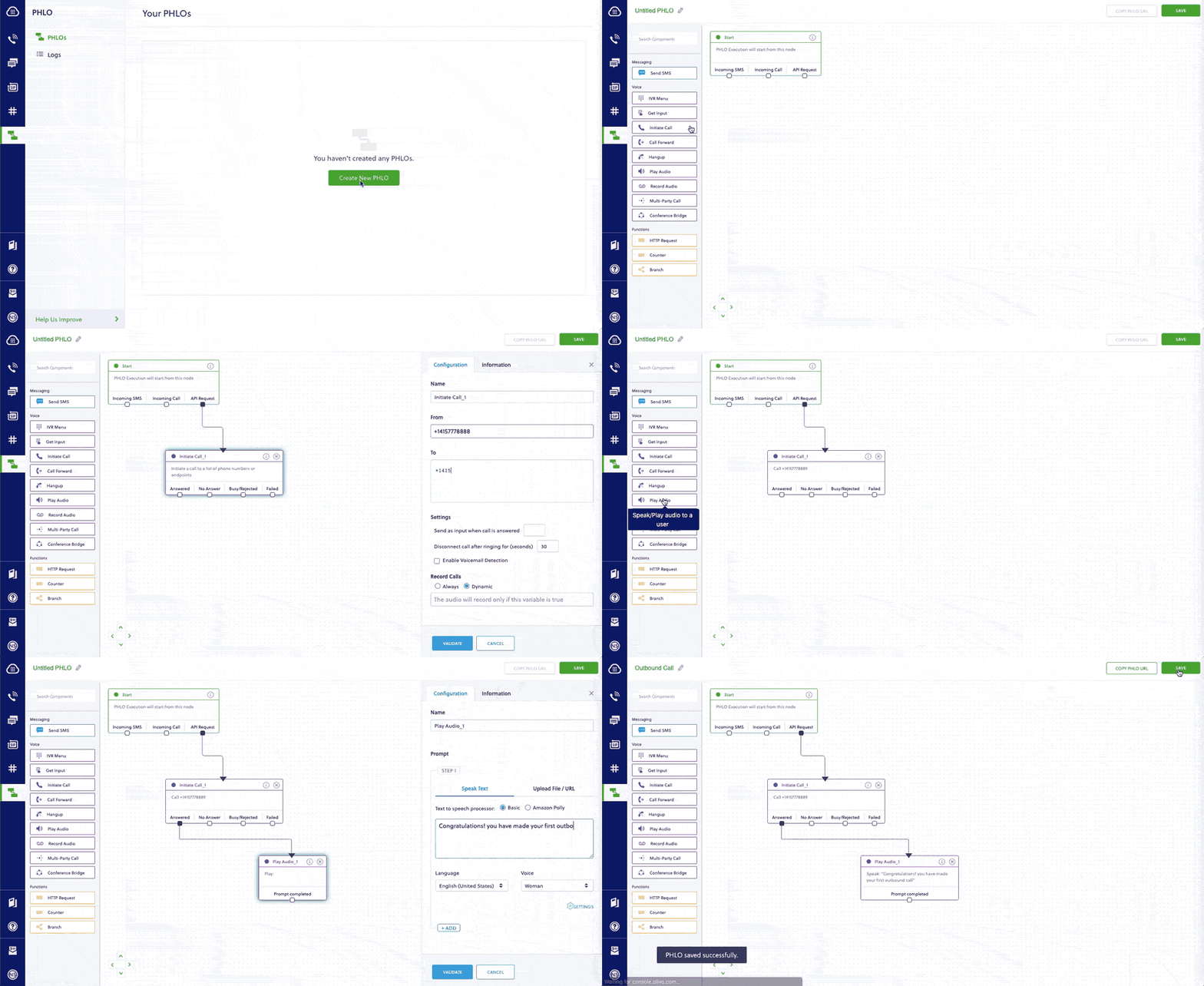
- Click Create New PHLO.
-
In the Choose your use case pop-up, click Build my own. The PHLO canvas will appear with the Start node.
Note: The Start node is the starting point of any PHLO. It lets you trigger a PHLO to start upon one of three actions: incoming SMS message, incoming call, or API request.
- From the list of components on the left side, drag and drop the Initiate Call component onto the canvas. When a component is placed on the canvas it becomes a node.
- Draw a line to connect the Start node’s API Request trigger state to the Initiate Call node.
-
In the Configuration pane at the right of the canvas, configure the Initiate Call node with a caller ID in the From field. Enter the destination number you wish to call in the To field.
Note: You can define a static payload by specifying values when you create the PHLO, or define a dynamic payload by passing values through Liquid templating parameters when you trigger the PHLO from your application.
- Once you’ve configured the node, click Validate to save the configuration.
- Similarly, create a node from the Play Audio component. Connect the Initiate Call node to the Play Audio node using the Answered trigger state.
- Configure the Play Audio node to play a message to the user by entering text in the Speak Text box in the Prompt section of the Configuration pane — for example, “Hello, you just received your first call.”
- Connect the Initiate Call node’s Answered trigger state to the Play Audio node.
- After you complete the configuration, give the PHLO a name by clicking in the upper left, then click Save.
Trigger the PHLO
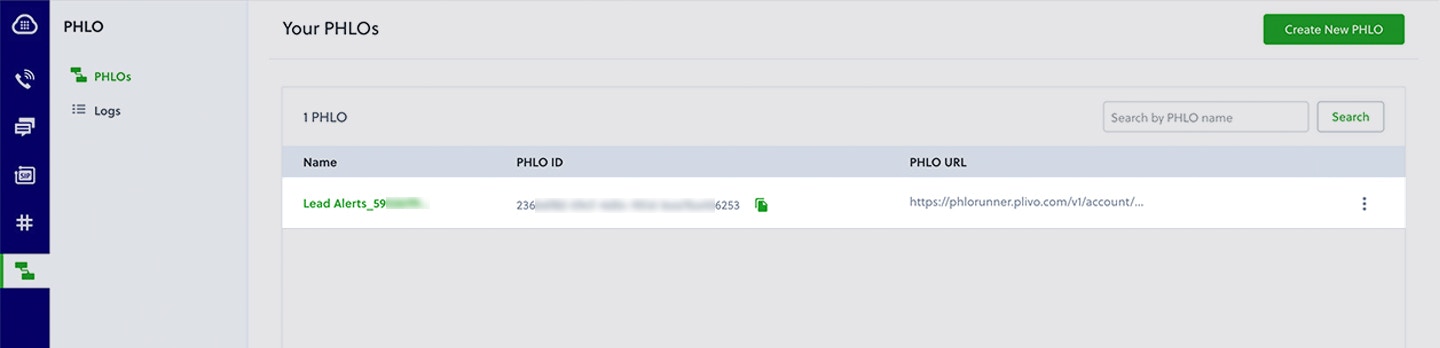
You integrate a PHLO into your application workflow by making an API request to trigger the PHLO with the required payload — the set of parameters you pass to the PHLO. You can define a static payload by specifying values when you create the PHLO, or define a dynamic payload by passing values through parameters when you trigger the PHLO from your application.In either case, you need your Auth ID and Auth Token, which you can get from the overview page of the Plivo console.
With a static payload
When you configure values when creating the PHLO, they act as a static payload.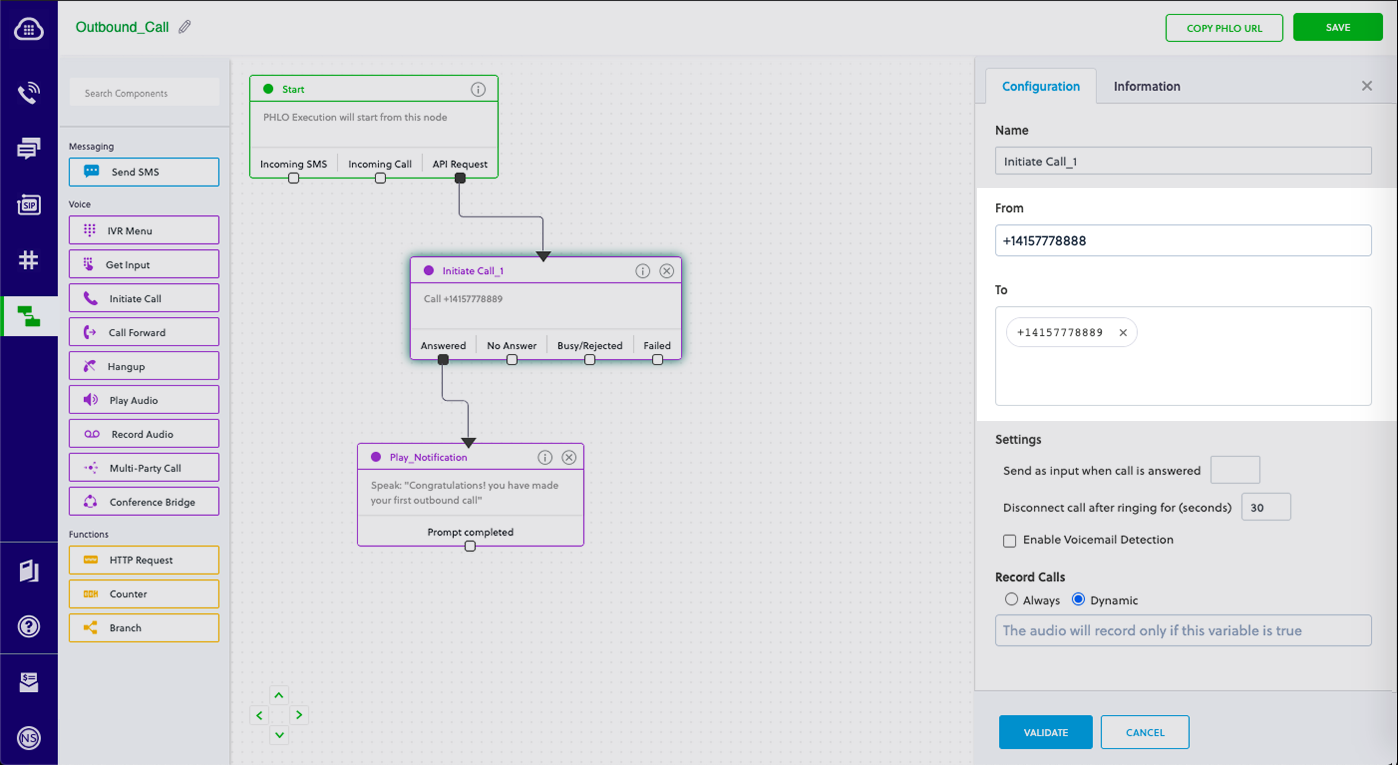
Code
Create a file calledTriggerPhlo.js and paste into it this code.Copy
Ask AI
var express = require('express')
var app = express()

app.post('/trigger_phlo/', function(req, res) {
    var plivo = require('plivo');
    var PhloClient = plivo.PhloClient;
    var authId = '<auth_id>';
    var authToken = '<auth_token>';
    var phloId = '<phlo_id>';
    var phloClient = phlo = null;

    phloClient = new PhloClient(authId, authToken);
    phloClient.phlo(phloId).run().then(function(result) {
        console.log('Phlo run result', result);
    }).catch(function(err) {
        console.error('Phlo run failed', err);
    })
})

app.set('port', (process.env.PORT || 5000));
app.listen(app.get('port'), function() {
    console.log('Node app is running on port', app.get('port'));
});
With a dynamic payload
To use dynamic values for the parameters, use Liquid templating parameters when you create the PHLO and pass the values from your code when you trigger it.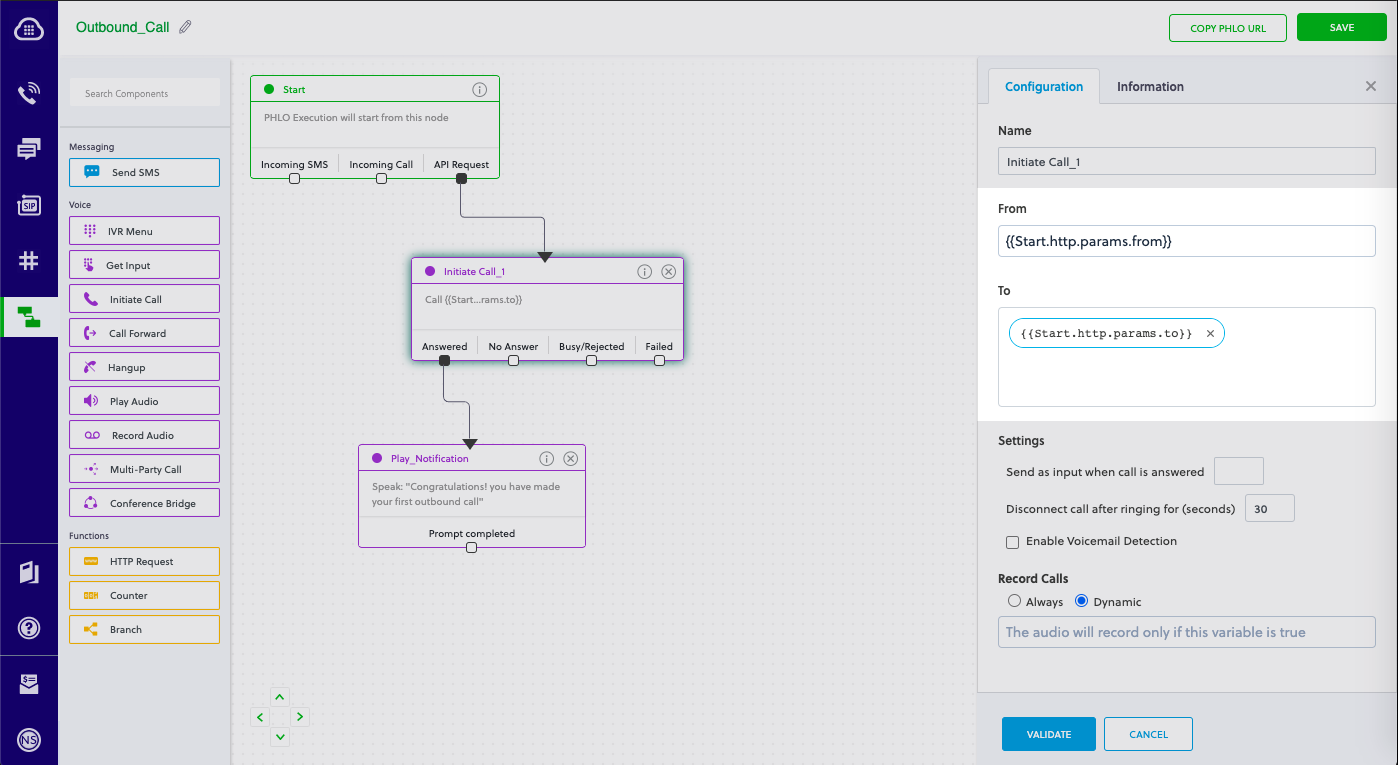
Code
Create a file calledTriggerPhlo.js and paste into it this code.Copy
Ask AI
var express = require('express')
var app = express()

app.post('/trigger_phlo/', function(req, res) {
    var plivo = require('plivo');
    var PhloClient = plivo.PhloClient;
    var authId = '<auth_id>';
    var authToken = '<auth_token>';
    var phloId = '<phlo_id>';
    var phloClient = phlo = null;
    var payload = {
        from: '<caller_id>',
        to: '<destination_number>'
    }
    phloClient = new PhloClient(authId, authToken);
    phloClient.phlo(phloId).run(payload).then(function (result) {
        console.log('Phlo run result', result);
    }).catch(function (err) {
        console.error('Phlo run failed', err);
    });
})

app.set('port', (process.env.PORT || 5000));
app.listen(app.get('port'), function() {
    console.log('Node app is running on port', app.get('port'));
});
Test
Save the file and run it.Copy
Ask AI
$ node TriggerPhlo.js
Receive your first inbound call
You can create and deploy a PHLO to receive an inbound call with a few clicks on the PHLO canvas, without writing a single line of code.Prerequisite
To receive incoming calls, you must have a voice-enabled Plivo phone number. You can rent numbers from the Numbers page of the Plivo console, or by using the Numbers API.Create the PHLO
To create a PHLO, visit the PHLO page of the Plivo console. If this is your first PHLO, the PHLO page will be empty.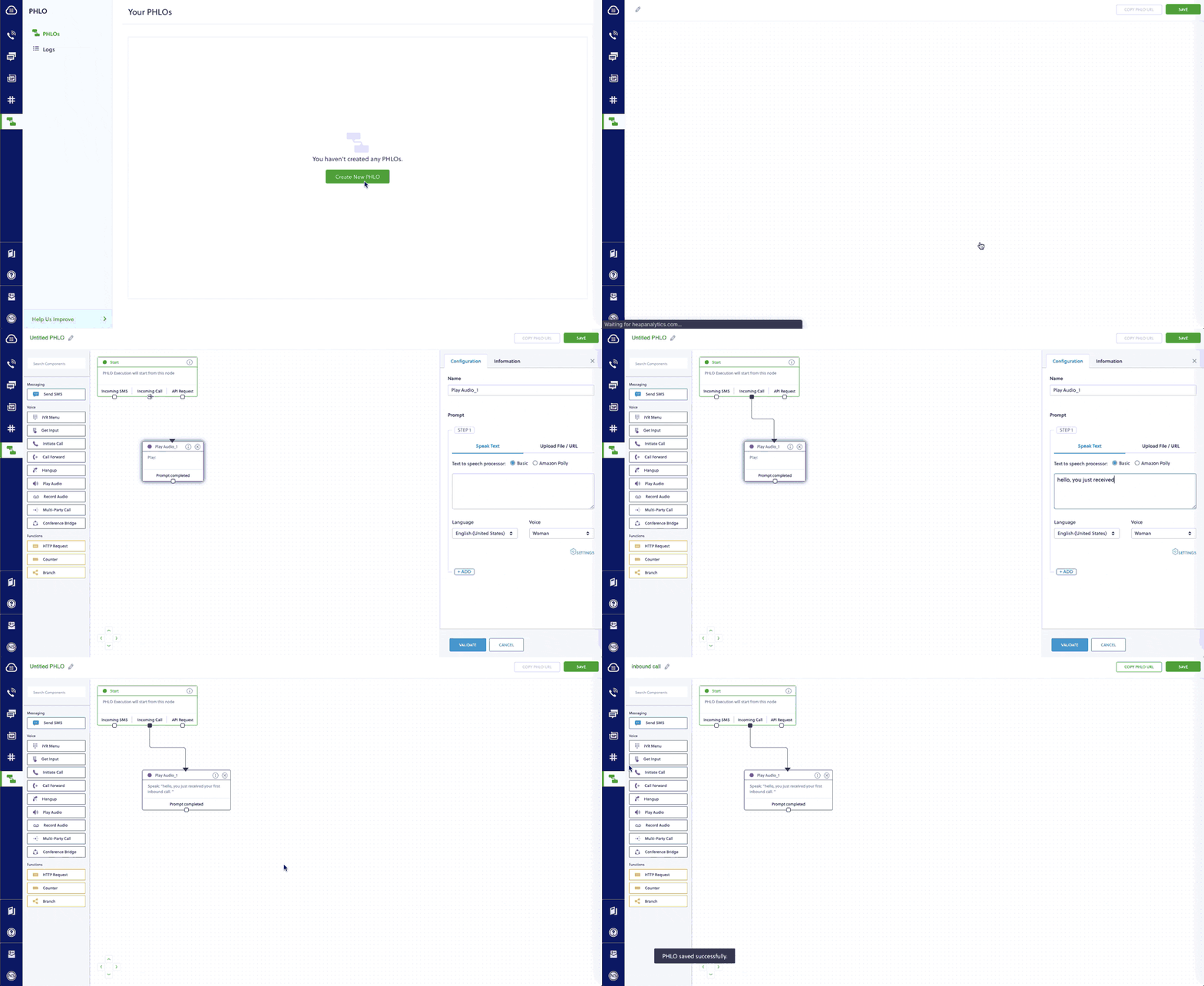
- Click Create New PHLO.
- In the Choose your use case pop-up, click Build my own. The PHLO canvas will appear with the Start node.
Note: The Start node is the starting point of any PHLO. It lets you trigger a PHLO to start upon one of three actions: incoming SMS message, incoming call, or API request.
- From the list of components on the left side, drag and drop the Play Audio component onto the canvas. When a component is placed on the canvas it becomes a node.
- Draw a line to connect the Start node’s Incoming Call trigger state to the Play Audio node.
- In the Configuration pane at the right of the canvas, configure the Play Audio node to play a message to the caller.
- Once you’ve configured the node, click Validate to save the configuration.
- Give the PHLO a name by clicking in the upper left, then click Save.
Assign the PHLO to a Plivo number
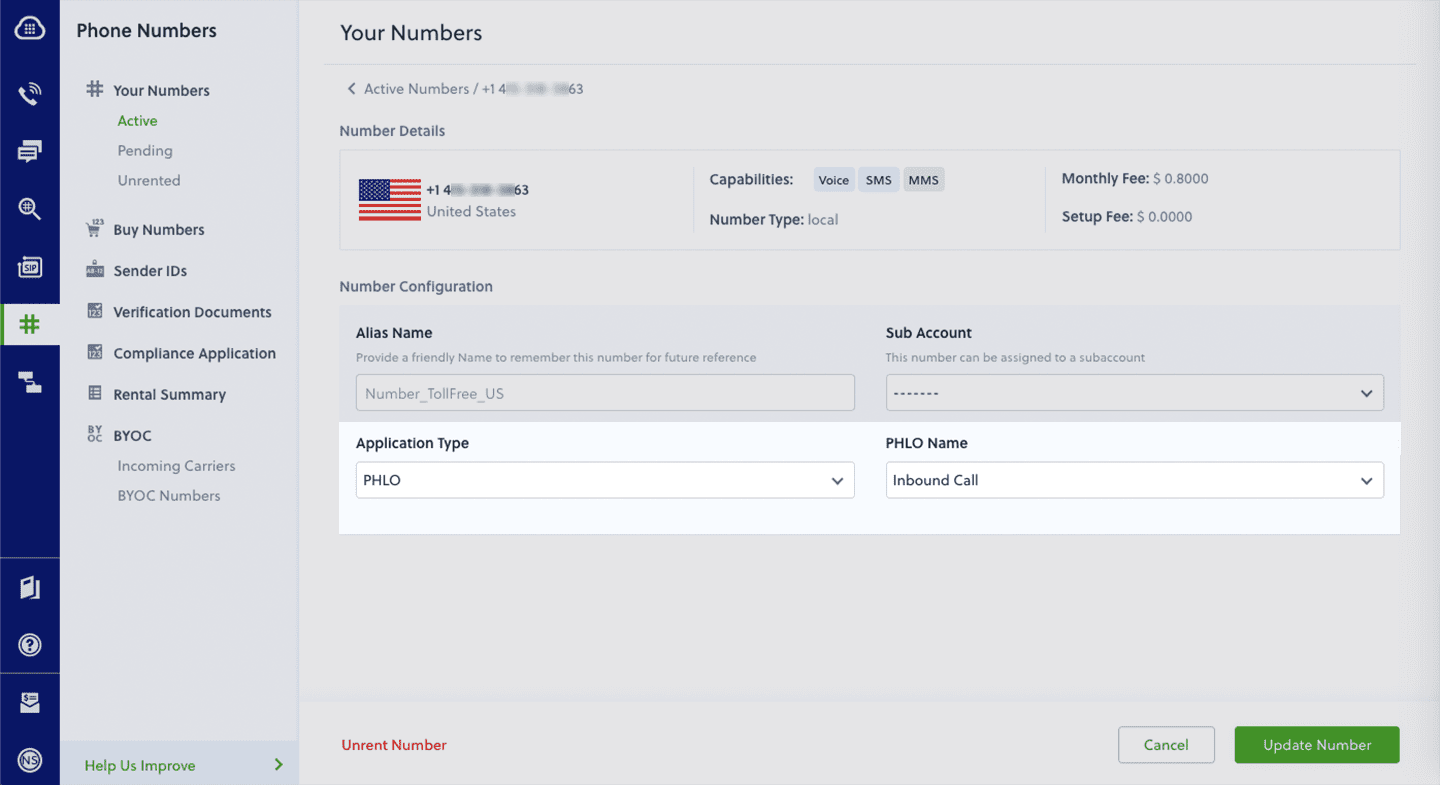
Once you’ve created and configured your PHLO, assign it to a Plivo number.- On the Numbers page of the console, under Your Numbers, click the phone number you want to use for the PHLO.
- In the Number Configuration box, select PHLO from the Application Type drop-down.
- From the PHLO Name drop-down, select the PHLO you want to use with the number, then click Update Number.
Test
You can now make a call to your Plivo phone number and see how the inbound call is handled.For more information about creating a PHLO application, see the PHLO Getting Started guide. For information on components and their variables, see the PHLO Components Library.Forward an inbound call
You can create and deploy a workflow to implement call forwarding with a few clicks on the PHLO canvas.Prerequisite
To receive incoming calls, you must have a voice-enabled Plivo phone number. You can rent numbers from the Numbers page of the Plivo console, or by using the Numbers API.Create the PHLO
To create a PHLO, visit the PHLO page of the Plivo console. If this is your first PHLO, the PHLO page will be empty.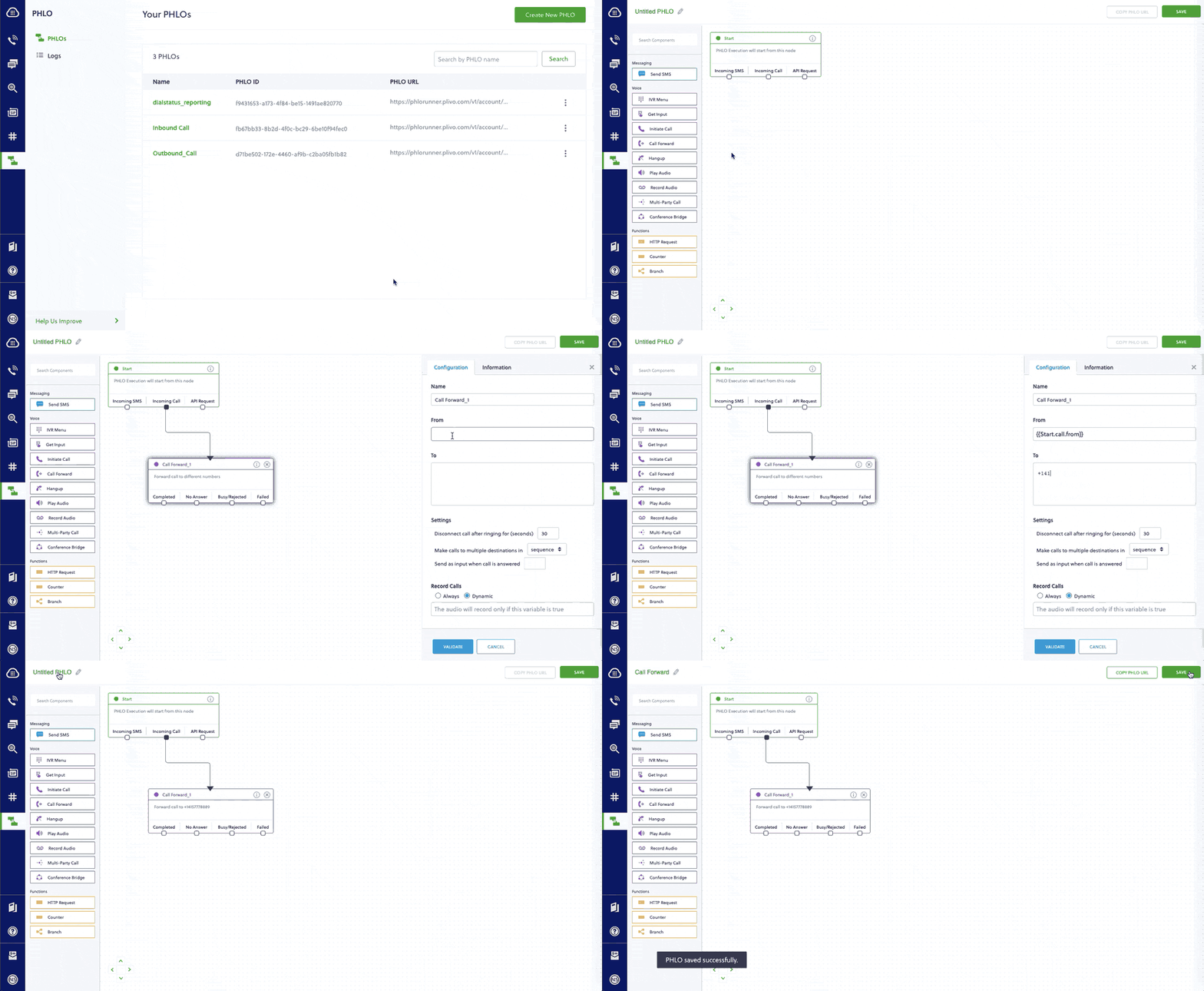
- Click Create New PHLO.
-
In the Choose your use case pop-up, click Build my own. The PHLO canvas will appear with the Start node.
Note: The Start node is the starting point of any PHLO. It lets you trigger a PHLO to start upon one of three actions: incoming SMS message, incoming call, or API request.
- From the list of components on the left side, drag and drop the Call Forward component onto the canvas. When a component is placed on the canvas it becomes a node.
-
Draw a line to connect the Start node‘s Incoming Call trigger state to the Call Forward node.
-
In the Configuration tab at the right of the canvas, configure the Call Forward node to select the From number using a variable. Enter two curly brackets to view all available variables, and choose the appropriate one. Enter all the numbers you want to call in the To field, separated with commas.
- Once you’ve configured the node, click Validate to save the configuration.
- Give the PHLO a name by clicking in the upper left, then click Save.
Assign the PHLO to a Plivo number
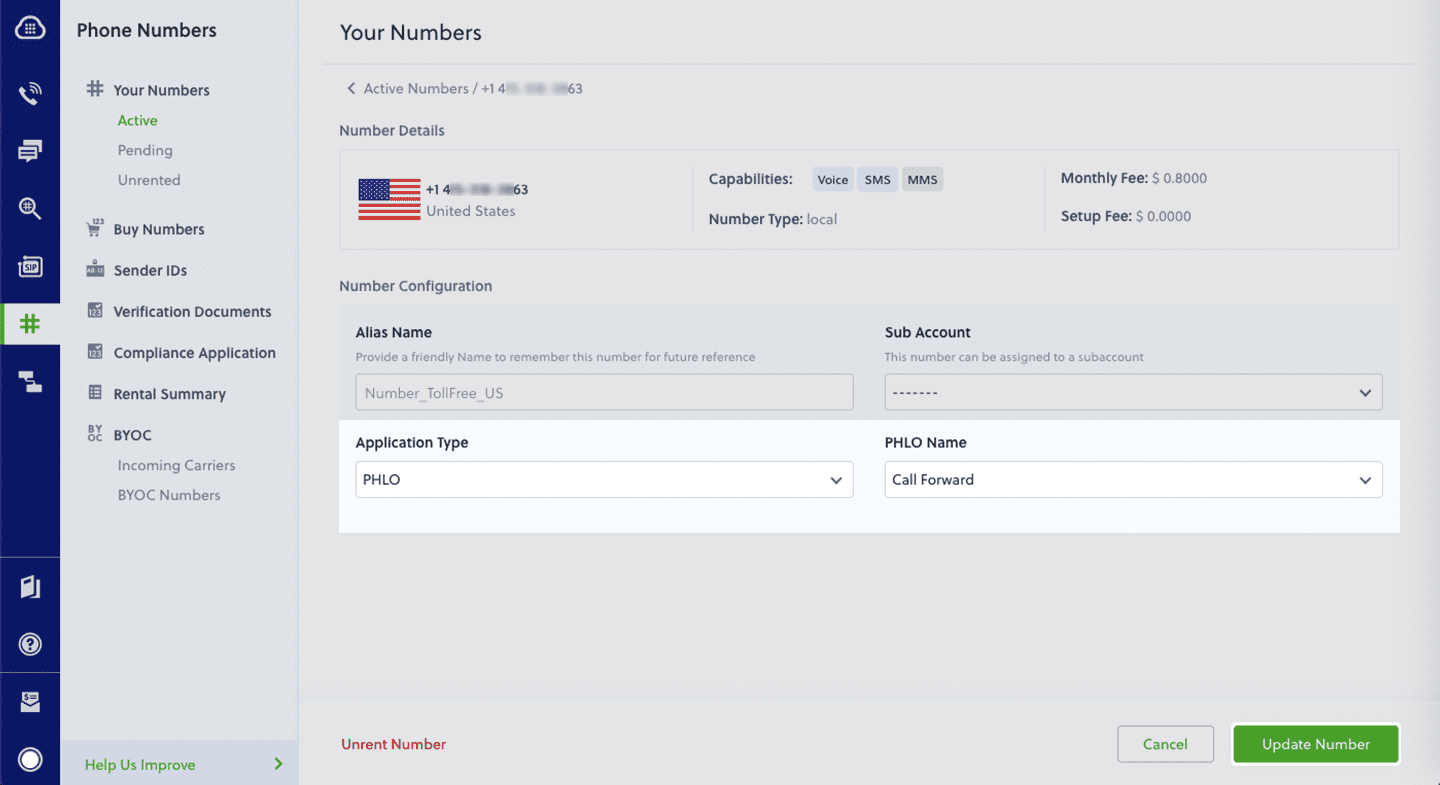
Once you’ve created and configured your PHLO, assign your PHLO to a Plivo number.- On the Numbers page of the console, under Your Numbers, click the phone number you want to use for the PHLO.
- In the Number Configuration box, select PHLO from the Application Type drop-down.
- From the PHLO Name drop-down, select the PHLO you want to use with the phone number, then click Update Number.
Test
You can now call your Plivo phone number and see how the inbound call is forwarded.For more information about creating a PHLO application, see the PHLO Getting Started guide. For information on components and their variables, see the PHLO Components Library.More use cases
We illustrate more than 20 use cases with code for both PHLO and API/XML on our documentation pages.Install Node.js, Express, and the Plivo Node.js SDK
You must set up and install Node.js, Express, and Plivo’s Node.js SDK before you make your first call.Install Node.js
You can check whether you have Node.js installed under macOS or Linux by running the commandnode --version in a terminal window. Under Windows, open a Windows command prompt or PowerShell and type node -v. If you don’t have Node.js installed or want a more current version, download and install it.Install Express and the Plivo Node.js SDK
Create a projects directory and change into it.Copy
Ask AI
$ mkdir mynodeapp
$ cd mynodeapp
Copy
Ask AI
$ npm install express plivo
Make your first outbound call
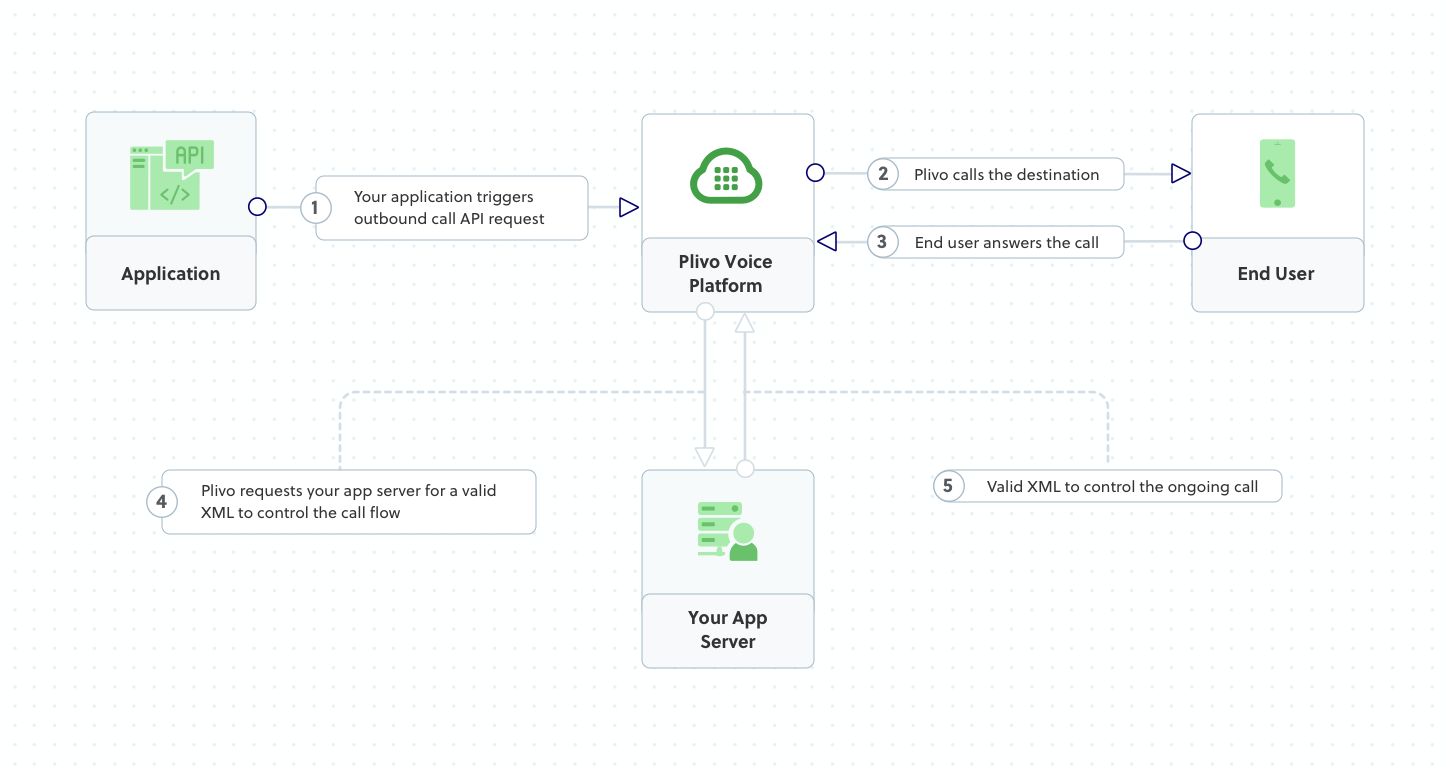
Copy
Ask AI
<Response>
<Speak>Congratulations! You've made your first outbound call!</Speak>
</Response>
Code
Create a file calledMakecall.js and paste into it this code.Copy
Ask AI
var plivo = require('plivo');

(function main() {
    'use strict';

    var client = new plivo.Client("<auth_id>","<auth_token>");
    client.calls.create(
        "<caller_id>",
        "<destination_number>",
        "https://s3.amazonaws.com/static.plivo.com/answer.xml",
        {
            answerMethod: "GET",
        },
    ).then(function (response) {
        console.log(response);
    }, function (err) {
        console.error(err);
    });
})();
Note:
We recommend that you store your credentials in the
auth_id and auth_token environment variables to avoid the possibility of accidentally committing them to source control. If you do this, you can initialize the client with no arguments and Plivo will automatically fetch the values from the environment variables. You can use process.env to store environment variables and retrieve them when initializing the client.Test
Save the file and run it.Copy
Ask AI
$ node Makecall.js
Receive your first inbound call
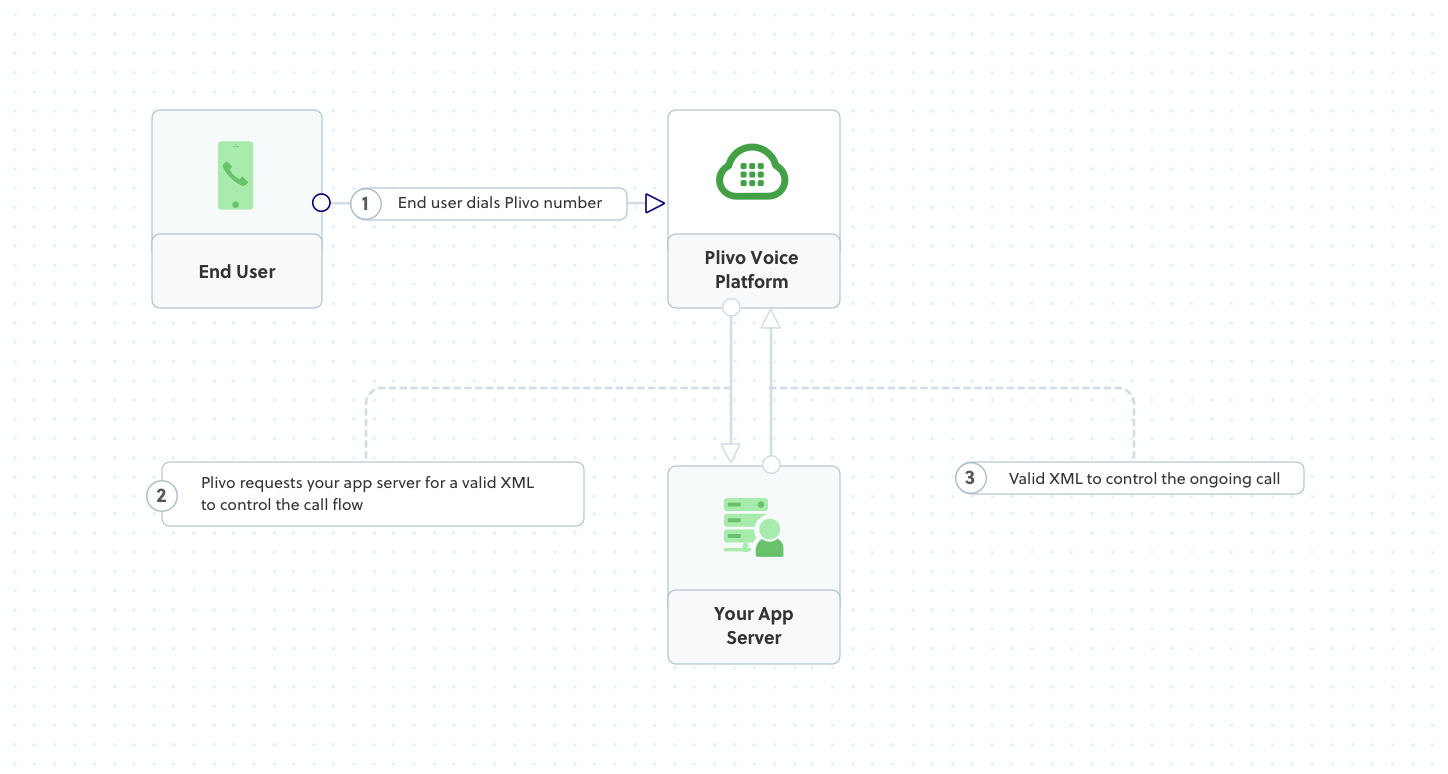
Set up an Express server to handle incoming calls
Create a file namedreceive_call.js and paste into it this code.Copy
Ask AI
var plivo = require('plivo');
var express = require('express');
var app = express();

app.all('/receive_call/', function(req, res) {
    var response = plivo.Response();
    var speak_body = "Hello, you just received your first call";
    response.addSpeak(speak_body);
    res.writeHead(200, {'Content-Type': 'text/xml'});
    res.end(response.toXML());
})

app.set('port', (process.env.PORT || 5000));
app.listen(app.get('port'), function() {
    console.log('Node app is running on port', app.get('port'));
});
Copy
Ask AI
$ node receive_call.js
Expose your local server to the internet
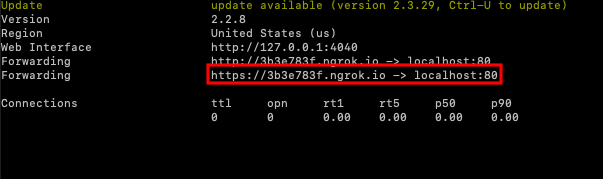
To receive incoming calls, your local server must connect with Plivo API services. For that, we recommend using ngrok, which exposes local servers running behind NATs and firewalls to the public internet over secure tunnels. Using ngrok, you can set webhooks that can talk to the Plivo server.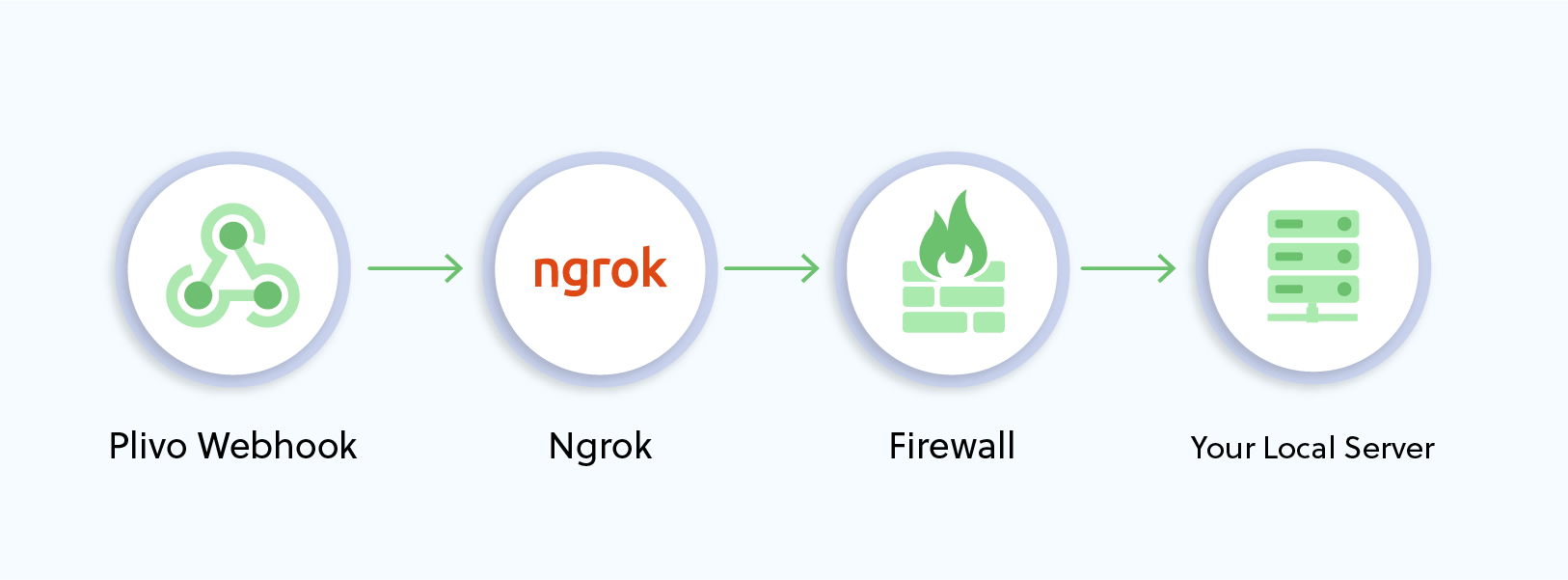
Copy
Ask AI
./ngrok http 80
Create a Plivo application to receive calls
Associate the controller you created with Plivo by creating a Plivo application. Visit Voice > Applications and click Add New Application. You can also use Plivo’s Application API.Give your application a name — we called oursReceive_call. Enter the server URL you want to use (for example https://<yourdomain>.com/receivecall/) in the Primary Answer URL field and set the method to POST. Click Create Application to save your application.
Assign a Plivo number to your application
Navigate to the Numbers page and select the phone number you want to use for this application.From the Application Type drop-down, selectXML Application.From the Plivo Application drop-down, select Receive Call (the name we gave the application).Click Update Number to save.
Test
Make a call to your Plivo number using any phone.Forward an incoming call
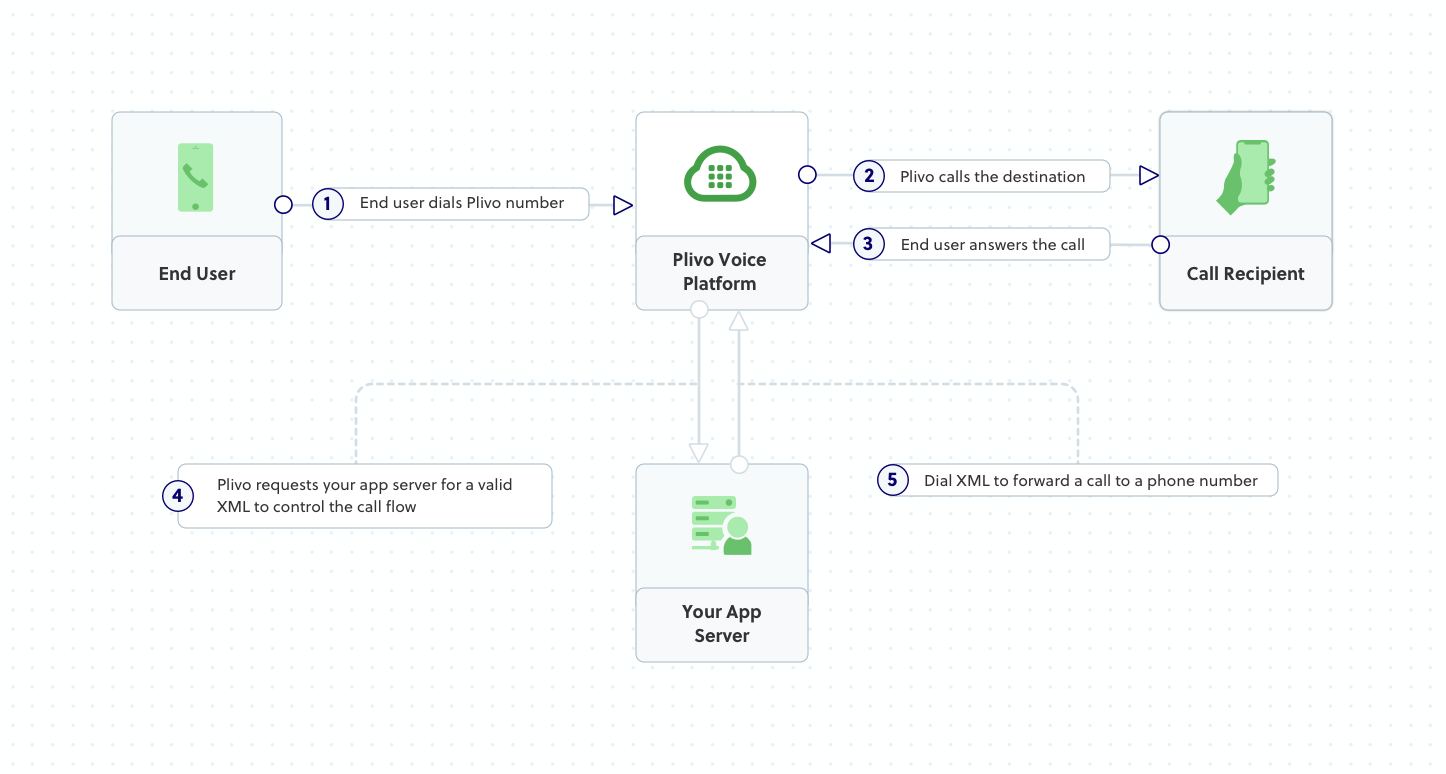
Set up an Express application to forward calls
Create a file calledforward_call.js and paste into it this code.Copy
Ask AI
var express = require('express')
var app = express()

app.post('/forward_call/', function(req, res) {
    var plivo = require('plivo');
    var response = plivo.Response();
    var dial = response.addDial();

    dial.addNumber("<destination_number>");
    res.send(response.toXML());
})

app.set('port', (process.env.PORT || 5000));
app.listen(app.get('port'), function() {
    console.log('Node app is running on port', app.get('port'));
});
Create a Plivo application to forward calls
Associate the Express application you created with Plivo by creating a Plivo application. Visit Voice > Applications in the Plivo console and click on Add New Application, or use Plivo’s Application API.Give your application a name — we called oursForward Call. Enter the server URL you want to use (for example https://<yourdomain>.com/forward_call/) in the Answer URL field and set the method to POST. Click Create Application to save your application.Assign a Plivo number to your application
Navigate to the Numbers page and select the phone number you want to use for this application.From the Application Type drop-down, selectXML Application.From the Plivo Application drop-down, select Forward Call (the name we gave the application).Click Update Number to save.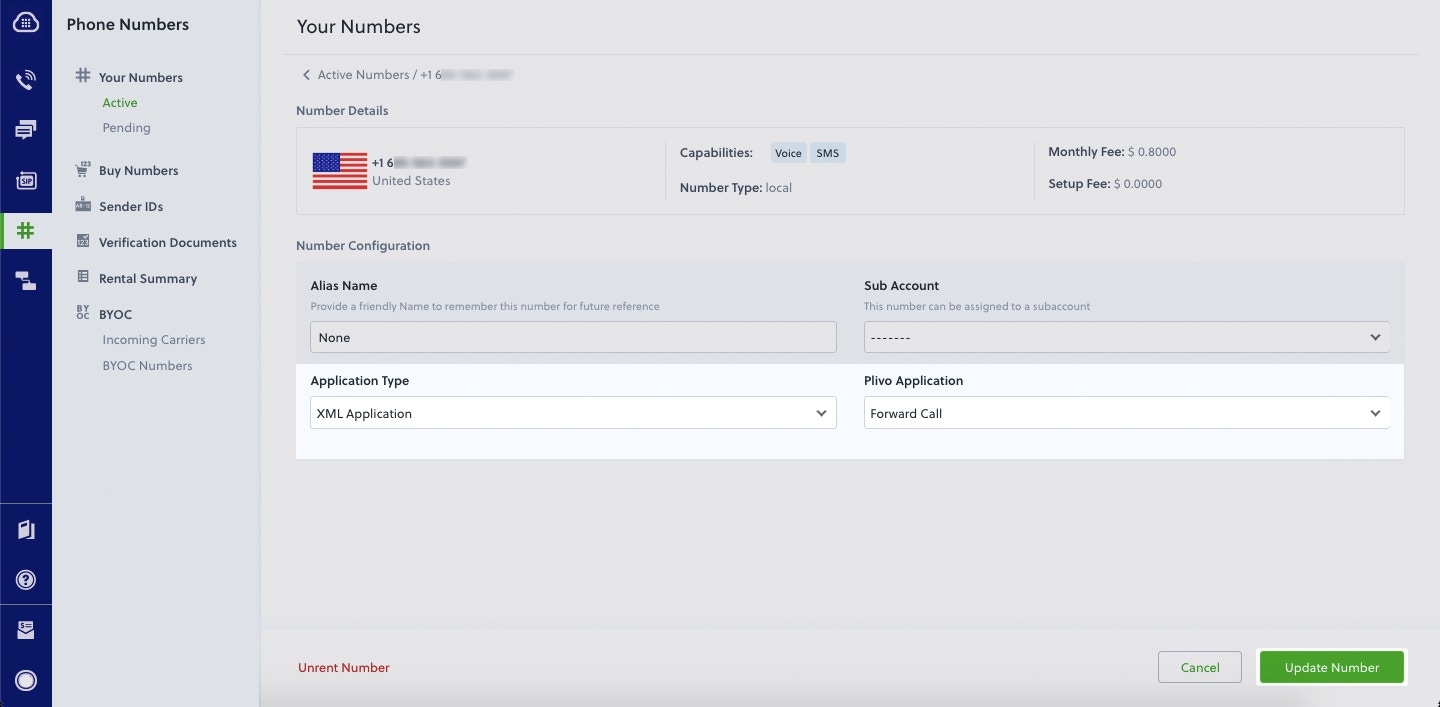
Test
Make a call to your Plivo number using any phone. Plivo will send a request to the answer URL you provided requesting an XML response and then forward the call according to the instructions in the XML document the server provides.More use cases
We illustrate more than 20 use cases with code for both API/XML and PHLO on our documentation pages.Get Started with Node.js using NestJS Framework
Start by signing up for a free trial account that you can use to experiment with and learn about our services. The free trial account comes with free credits, and you can add more as you go along. You can also add a phone number to your account to start testing the full range of our voice and SMS features. A page in our support portal walks you through the signup process.You can start making and receiving calls either by using our PHLO visual workflow builder or our APIs and XML documents. Follow the instructions in one of the tabs below.- Using PHLO
- Using XML
Set up Your Node.js and NestJS dev environment
You must set up and install Node.js and Plivo’s Node.js SDK before you make your first call.You can check whether you have Node.js installed under macOS or Linux by running the commandnode --version in a terminal window. Under Windows, open a Windows command prompt or PowerShell and type node -v. If you don’t have Node.js installed or want a more current version, download and install it.Make your first outbound call
You can create and deploy a PHLO to make an outbound call with a few clicks on the PHLO canvas, and trigger it with some simple code.Create the PHLO
To create a PHLO, visit the PHLO page of the Plivo console. If this is your first PHLO, the PHLO page will be empty.- Click Create New PHLO.
-
In the Choose your use case pop-up, click Build my own. The PHLO canvas will appear with the Start node.
Note: The Start node is the starting point of any PHLO. It lets you trigger a PHLO to start upon one of three actions: incoming SMS message, incoming call, or API request.
- From the list of components on the left side, drag and drop the Initiate Call component onto the canvas. When a component is placed on the canvas it becomes a node.
- Draw a line to connect the Start node’s API Request trigger state to the Initiate Call node.
-
In the Configuration pane at the right of the canvas, configure the Initiate Call node with a caller ID in the From field. Enter the destination number you wish to call in the To field.
Note: You can define a static payload by specifying values when you create the PHLO, or define a dynamic payload by passing values through Liquid templating parameters when you trigger the PHLO from your application.
- Once you’ve configured the node, click Validate to save the configuration.
- Similarly, create a node from the Play Audio component. Connect the Initiate Call node to the Play Audio node using the Answered trigger state.
- Configure the Play Audio node to play a message to the user by entering text in the Speak Text box in the Prompt section of the Configuration pane — for example, “Hello, you just received your first call.”
- Connect the Initiate Call node’s Answered trigger state to the Play Audio node.
- After you complete the configuration, give the PHLO a name by clicking in the upper left, then click Save.
Trigger the PHLO
You integrate a PHLO into your application workflow by making an API request to trigger the PHLO with the required payload — the set of parameters you pass to the PHLO. You can define a static payload by specifying values when you create the PHLO, or define a dynamic payload by passing values through parameters when you trigger the PHLO from your application.In either case, you need your Auth ID and Auth Token, which you can get from the overview page of the Plivo console.With a static payload
When you configure values when creating the PHLO, they act as a static payload.Code
Edit the app.controller.ts file and paste into it this code.Copy
Ask AI
import { Controller, Get, Post, Res, HttpStatus } from '@nestjs/common';
import { Response } from 'express';
import { AppService } from './app.service';
const plivo = require('plivo');

@Controller()
export class AppController {
  constructor(private readonly appService: AppService) {}

  @Get('/trigger_phlo/')
  triggerPhlo() {
    const PhloClient = plivo.PhloClient;
    const authId = '<auth_id>';
    const authToken = '<auth_token>';
    const phloId = '<phlo_id>';
    const phloClient = new PhloClient(authId, authToken);
    phloClient
      .phlo(phloId)
      .run()
      .then(function (result) {
        console.log('Phlo run result', result);
      })
      .catch(function (err) {
        console.error('Phlo run failed', err);
      });
  }
}
With a dynamic payload
To use dynamic values for the parameters, use Liquid templating parameters when you create the PHLO and pass the values from your code when you trigger it.Code
Edit the app.controller.ts file and paste into it this code.Copy
Ask AI
import { Controller, Get, Post, Res, HttpStatus } from '@nestjs/common';
import { Response } from 'express';
import { AppService } from './app.service';
const plivo = require('plivo');

@Controller()
export class AppController {
  constructor(private readonly appService: AppService) {}

  @Get('/trigger_phlo')
  triggerPhlo() {
    const PhloClient = plivo.PhloClient;
    const authId = '<auth_id>';
    const authToken = '<auth_token>';
    const phloId = '<phlo_id>';
    const payload = {
      from: '<caller_id>',
      to: '<destination_number>',
    };

    const phloClient = new PhloClient(authId, authToken);
    phloClient
      .phlo(phloId)
      .run(payload)
      .then(function (result) {
        console.log('Phlo run result', result);
      })
      .catch(function (err) {
        console.error('Phlo run failed', err);
      });
  }
}
Test
Save the file and start the NestJS application.Copy
Ask AI
$ npm run start
Receive your first inbound call
You can create and deploy a PHLO to receive an inbound call with a few clicks on the PHLO canvas, without writing a single line of code.Prerequisite
To receive incoming calls, you must have a voice-enabled Plivo phone number. You can rent numbers from the Numbers page of the Plivo console, or by using the Numbers API.Create the PHLO
To create a PHLO, visit the PHLO page of the Plivo console. If this is your first PHLO, the PHLO page will be empty.- Click Create New PHLO.
- In the Choose your use case pop-up, click Build my own. The PHLO canvas will appear with the Start node.
**Note:**The Start node is the starting point of any PHLO. It lets you trigger a PHLO to start upon one of three actions: incoming SMS message, incoming call, or API request.
- From the list of components on the left side, drag and drop the Play Audio component onto the canvas. When a component is placed on the canvas it becomes a node.
- Draw a line to connect the Start node’s Incoming Call trigger state to the Play Audio node.
- In the Configuration pane at the right of the canvas, configure the Play Audio node to play a message to the caller.
- Once you’ve configured the node, click Validate to save the configuration.
- Give the PHLO a name by clicking in the upper left, then click Save.
Assign the PHLO to a Plivo number
Once you’ve created and configured your PHLO, assign it to a Plivo number.- On the Numbers page of the console, under Your Numbers, click the phone number you want to use for the PHLO.
- In the Number Configuration box, select PHLO from the Application Type drop-down.
- From the PHLO Name drop-down, select the PHLO you want to use with the number, then click Update Number.
Test
You can now make a call to your Plivo phone number and see how the inbound call is handled.For more information about creating a PHLO application, see the PHLO Getting Started guide. For information on components and their variables, see the PHLO Components Library.Forward an inbound call
You can create and deploy a workflow to implement call forwarding with a few clicks on the PHLO canvas.Prerequisite
To receive incoming calls, you must have a voice-enabled Plivo phone number. You can rent numbers from the Numbers page of the Plivo console, or by using the Numbers API.Create the PHLO
To create a PHLO, visit the PHLO page of the Plivo console. If this is your first PHLO, the PHLO page will be empty.- Click Create New PHLO.
-
In the Choose your use case pop-up, click Build my own. The PHLO canvas will appear with the Start node.
Note: The Start node is the starting point of any PHLO. It lets you trigger a PHLO to start upon one of three actions: incoming SMS message, incoming call, or API request.
- From the list of components on the left side, drag and drop the Call Forward component onto the canvas. When a component is placed on the canvas it becomes a node.
-
Draw a line to connect the Start node‘s Incoming Call trigger state to the Call Forward node.
-
In the Configuration tab at the right of the canvas, configure the Call Forward node to select the From number using a variable. Enter two curly brackets to view all available variables, and choose the appropriate one. Enter all the numbers you want to call in the To field, separated with commas.
- Once you’ve configured the node, click Validate to save the configuration.
- Give the PHLO a name by clicking in the upper left, then click Save.
Assign the PHLO to a Plivo number
Once you’ve created and configured your PHLO, assign your PHLO to a Plivo number.- On the Numbers page of the console, under Your Numbers, click the phone number you want to use for the PHLO.
- In the Number Configuration box, select PHLO from the Application Type drop-down.
- From the PHLO Name drop-down, select the PHLO you want to use with the phone number, then click Update Number.
Test
You can now call your Plivo phone number and see how the inbound call is forwarded.For more information about creating a PHLO application, see the PHLO Getting Started guide. For information on components and their variables, see the PHLO Components Library.More use cases
We illustrate more than 20 use cases with code for both PHLO and API/XML on our documentation pages.Install Node.js, NestJS, and the Plivo Node.js SDK
You must set up and install Node.js, NestJS, and Plivo’s Node.js SDK before you make your first call.Install Node.js
You can check whether you have Node.js installed under macOS or Linux by running the commandnode --version in a terminal window. Under Windows, open a Windows command prompt or PowerShell and type node -v. If you don’t have Node.js installed or want a more current version, download and install it.Install NestJS
Install Nest CLI using npm.Copy
Ask AI
$ npm i @nestjs/cli
Copy
Ask AI
$ nest new plivovoice
$ cd plivovoice
Install the Plivo Node.js SDK
Install the Plivo Node.js SDK using npm.Copy
Ask AI
$ npm install plivo
Make your first outbound call
Copy
Ask AI
<Response>
<Speak>Congratulations! You've made your first outbound call!</Speak>
</Response>
Code
Editapp.controller.ts and paste into it this code.Copy
Ask AI
import { Controller, Get, Post, Res, HttpStatus } from '@nestjs/common';
import { Response } from 'express';
import { AppService } from './app.service';
const plivo = require('plivo');

@Controller()
export class AppController {
  constructor(private readonly appService: AppService) {}

  @Get('/outbound')
  makeCall() {
    const client = new plivo.Client(
      'auth_id',
      'auth_token',
    );
    client.calls
      .create(
        '<caller_id>',
        '<destination_number>',
        'https://s3.amazonaws.com/static.plivo.com/answer.xml',
        {
          answerMethod: 'GET',
        },
      )
      .then(
        function (response) {
          console.log(response);
        },
        function (err) {
          console.error(err);
        },
      );
  }
}
Note:
We recommend that you store your credentials in the
auth_id and auth_token environment variables to avoid the possibility of accidentally committing them to source control. If you do this, you can initialize the client with no arguments and Plivo will automatically fetch the values from the environment variables. You can use process.env to store environment variables and retrieve them when initializing the client.Test
Save the file and start the NestJS application.Copy
Ask AI
$ npm run start
Receive your first inbound call
Set up a NestJS server to handle incoming calls
Editapp.controller.ts and paste into it this code.Copy
Ask AI
import { Controller, Get, Post, Res, HttpStatus } from '@nestjs/common';
import { Response } from 'express';
import { AppService } from './app.service';
const plivo = require('plivo');

@Controller()
export class AppController {
  constructor(private readonly appService: AppService) {}

  @Get('/outbound')
  makeCall() {
    ..........;
    ..........;
  }
  @Get('/inbound')
  xmlResponse(@Res() res: Response) {
    const response = plivo.Response();
    const speak_body = 'Hello, you just received your first call';
    response.addSpeak(speak_body);
    res.set('Content-Type', 'text/xml');
    res.send(response.toXML());
  }
}
Copy
Ask AI
$ npm run start
Expose your local server to the internet
To receive incoming calls, your local server must connect with Plivo API services. For that, we recommend using ngrok, which exposes local servers running behind NATs and firewalls to the public internet over secure tunnels. Using ngrok, you can set webhooks that can talk to the Plivo server.Copy
Ask AI
./ngrok http 80
Create a Plivo application to receive calls
Associate the controller you created with Plivo by creating a Plivo application. Visit Voice > Applications and click Add New Application. You can also use Plivo’s Application API.Give your application a name — we called oursReceive_call. Enter the server URL you want to use (for example https://<yourdomain>.com/receivecall/) in the Primary Answer URL field and set the method to POST. Click Create Application to save your application.Assign a Plivo number to your application
Navigate to the Numbers page and select the phone number you want to use for this application.From the Application Type drop-down, selectXML Application.From the Plivo Application drop-down, select Receive Call (the name we gave the application).Click Update Number to save.Test
Make a call to your Plivo number using any phone.Forward an incoming call
Set up a NestJS application to forward calls
Create a file calledforward_call.js and paste into it this code.Copy
Ask AI
import { Controller, Get, Post, Res, HttpStatus } from '@nestjs/common';
import { Response } from 'express';
import { AppService } from './app.service';
const plivo = require('plivo');

@Controller()
export class AppController {
  constructor(private readonly appService: AppService) {}

  @Get('/outbound')
  makeCall() {
    ..........;
    ..........;
  }
  @Get('/inbound')
  xmlResponse(@Res() res: Response) {
    ..........;
    ..........;
  }
  @Get('/forward')
  forwardCall(@Res() res: Response) {
    const response = plivo.Response();
    const dial = response.addDial();
    dial.addNumber('<destination_number>');
    res.set('Content-Type', 'text/xml');
    res.send(response.toXML());
  }
}
Create a Plivo application to forward calls
Associate the NestJS application you created with Plivo by creating a Plivo application. Visit Voice > Applications in the Plivo console and click on Add New Application, or use Plivo’s Application API.Give your application a name — we called oursForward Call. Enter the server URL you want to use (for example https://<yourdomain>.com/forward_call/) in the Answer URL field and set the method to POST. Click Create Application to save your application.Assign a Plivo number to your application
Navigate to the Numbers page and select the phone number you want to use for this application.From the Application Type drop-down, selectXML Application.From the Plivo Application drop-down, select Forward Call (the name we gave the application).Click Update Number to save.Test
Make a call to your Plivo number using any phone. Plivo will send a request to the answer URL you provided requesting an XML response and then forward the call according to the instructions in the XML document the server provides.More use cases
We illustrate more than 20 use cases with code for both API/XML and PHLO on our documentation pages.Get Started with Node.js using Sails Framework
Start by signing up for a free trial account that you can use to experiment with and learn about our services. The free trial account comes with free credits, and you can add more as you go along. You can also add a phone number to your account to start testing the full range of our voice and SMS features. A page in our support portal walks you through the signup process.You can start making and receiving calls either by using our PHLO visual workflow builder or our APIs and XML documents. Follow the instructions in one of the tabs below.- Using PHLO
- Using XML
Install Node.js, Sails, and the Plivo Node.js SDK
You must set up and install Node.js, Sails, and Plivo’s Node SDK before you make your first call.Install Node.js
You can check whether you have Node.js installed under macOS or Linux by running the commandnode --version in a terminal window. Under Windows, open a Windows command prompt or PowerShell and type node -v. If you don’t have Node.js installed or want a more current version, download and install it.Install Sails
Install Sails using npm.Copy
Ask AI
$ npm install sails -g
Copy
Ask AI
$ sails new <app_name>
$ cd <app_name>
Install the Plivo Node.js SDK
Install the Plivo Node.js SDK using npm.Copy
Ask AI
$ npm install plivo
Make your first outbound call
You can create and deploy a PHLO to make an outbound call with a few clicks on the PHLO canvas, and trigger it with some simple code.Create the PHLO
To create a PHLO, visit the PHLO page of the Plivo console. If this is your first PHLO, the PHLO page will be empty.- Click Create New PHLO.
-
In the Choose your use case pop-up, click Build my own. The PHLO canvas will appear with the Start node.
Note: The Start node is the starting point of any PHLO. It lets you trigger a PHLO to start upon one of three actions: incoming SMS message, incoming call, or API request.
- From the list of components on the left side, drag and drop the Initiate Call component onto the canvas. When a component is placed on the canvas it becomes a node.
- Draw a line to connect the Start node’s API Request trigger state to the Initiate Call node.
-
In the Configuration pane at the right of the canvas, configure the Initiate Call node with a caller ID in the From field. Enter the destination number you wish to call in the To field.
Note: You can define a static payload by specifying values when you create the PHLO, or define a dynamic payload by passing values through Liquid templating parameters when you trigger the PHLO from your application.
- Once you’ve configured the node, click Validate to save the configuration.
- Similarly, create a node from the Play Audio component. Connect the Initiate Call node to the Play Audio node using the Answered trigger state.
- Configure the Play Audio node to play a message to the user by entering text in the Speak Text box in the Prompt section of the Configuration pane — for example, “Hello, you just received your first call.”
- Connect the Initiate Call node’s Answered trigger state to the Play Audio node.
- After you complete the configuration, give the PHLO a name by clicking in the upper left, then click Save.
Trigger the PHLO
You integrate a PHLO into your application workflow by making an API request to trigger the PHLO with the required payload — the set of parameters you pass to the PHLO. You can define a static payload by specifying values when you create the PHLO, or define a dynamic payload by passing values through parameters when you trigger the PHLO from your application.In either case, you need your Auth ID and Auth Token, which you can get from the overview page of the Plivo console.With a static payload
When you configure values when creating the PHLO, they act as a static payload.Code
Edit api/controllers/HelloController.js and paste into it this code.Copy
Ask AI
 var plivo = require('plivo');

 module.exports = {
     trigger_phlo: function(req, res) {
         var PhloClient = plivo.PhloClient;
         var authId = '<auth_id>';
         var authToken = '<auth_token>';
         var phloId = '<phlo_id>';
         var phloClient = phlo = null;

         phloClient = new PhloClient(authId, authToken);
         phloClient.phlo(phloId).run().then(function(result) {
             return res.status(200).json(result);
         }).catch(function(err) {
             console.error('Phlo run failed', err);
         })
     },
 };
Copy
Ask AI
'POST /trigger_phlo' : 'HelloController.trigger_phlo',
Test
Save the file and run it.Copy
Ask AI
$ sails lift
With a dynamic payload
To use dynamic values for the parameters, use Liquid templating parameters when you create the PHLO and pass the values from your code when you trigger it.Code
Edit api/controllers/HelloController.js and paste into it this code.Copy
Ask AI
var plivo = require('plivo');

module.exports = {
    trigger_phlo: function(req, res) {

        var PhloClient = plivo.PhloClient;
        var authId = '<auth_id>';
        var authToken = '<auth_token>';
        var phloId = '<phlo_id>';
        var phloClient = phlo = null;
        const payload = {
            From: '<caller_id>',
            To: '<destination_number>',
        };

        phloClient = new PhloClient(authId, authToken);
        phloClient.phlo(phloId).run(payload).then(function(result) {
            return res.status(200).json(result);
        }).catch(function(err) {
            console.error('Phlo run failed', err);
        })
    },

};
Copy
Ask AI
'POST /trigger_phlo' : 'HelloController.trigger_phlo',
Test
Save the file and run it.Copy
Ask AI
$ sails lift
Receive your first inbound call
You can create and deploy a PHLO to receive an inbound call with a few clicks on the PHLO canvas, without writing a single line of code.Prerequisite
To receive incoming calls, you must have a voice-enabled Plivo phone number. You can rent numbers from the Numbers page of the Plivo console, or by using the Numbers API.Create the PHLO
To create a PHLO, visit the PHLO page of the Plivo console. If this is your first PHLO, the PHLO page will be empty.- Click Create New PHLO.
- In the Choose your use case pop-up, click Build my own. The PHLO canvas will appear with the Start node.
Note: The Start node is the starting point of any PHLO. It lets you trigger a PHLO to start upon one of three actions: incoming SMS message, incoming call, or API request.
- From the list of components on the left side, drag and drop the Play Audio component onto the canvas. When a component is placed on the canvas it becomes a node.
- Draw a line to connect the Start node’s Incoming Call trigger state to the Play Audio node.
- In the Configuration pane at the right of the canvas, configure the Play Audio node to play a message to the caller.
- Once you’ve configured the node, click Validate to save the configuration.
- Give the PHLO a name by clicking in the upper left, then click Save.
Assign the PHLO to a Plivo number
Once you’ve created and configured your PHLO, assign it to a Plivo number.- On the Numbers page of the console, under Your Numbers, click the phone number you want to use for the PHLO.
- In the Number Configuration box, select PHLO from the Application Type drop-down.
- From the PHLO Name drop-down, select the PHLO you want to use with the number, then click Update Number.
Test
You can now make a call to your Plivo phone number and see how the inbound call is handled.For more information about creating a PHLO application, see the PHLO Getting Started guide. For information on components and their variables, see the PHLO Components Library.Forward an inbound call
You can create and deploy a workflow to implement call forwarding with a few clicks on the PHLO canvas.Prerequisite
To receive incoming calls, you must have a voice-enabled Plivo phone number. You can rent numbers from the Numbers page of the Plivo console, or by using the Numbers API.Create the PHLO
To create a PHLO, visit the PHLO page of the Plivo console. If this is your first PHLO, the PHLO page will be empty.- Click Create New PHLO.
-
In the Choose your use case pop-up, click Build my own. The PHLO canvas will appear with the Start node.
Note: The Start node is the starting point of any PHLO. It lets you trigger a PHLO to start upon one of three actions: incoming SMS message, incoming call, or API request.
- From the list of components on the left side, drag and drop the Call Forward component onto the canvas. When a component is placed on the canvas it becomes a node.
-
Draw a line to connect the Start node‘s Incoming Call trigger state to the Call Forward node.
-
In the Configuration tab at the right of the canvas, configure the Call Forward node to select the From number using a variable. Enter two curly brackets to view all available variables, and choose the appropriate one. Enter all the numbers you want to call in the To field, separated with commas.
- Once you’ve configured the node, click Validate to save the configuration.
- Give the PHLO a name by clicking in the upper left, then click Save.
Assign the PHLO to a Plivo number
Once you’ve created and configured your PHLO, assign your PHLO to a Plivo number.- On the Numbers page of the console, under Your Numbers, click the phone number you want to use for the PHLO.
- In the Number Configuration box, select PHLO from the Application Type drop-down.
- From the PHLO Name drop-down, select the PHLO you want to use with the phone number, then click Update Number.
Test
You can now call your Plivo phone number and see how the inbound call is forwarded.For more information about creating a PHLO application, see the PHLO Getting Started guide. For information on components and their variables, see the PHLO Components Library.More use cases
We illustrate more than 20 use cases with code for both PHLO and API/XML on our documentation pages.Install Node.js, Sails, and the Plivo Node.js SDK
You must set up and install Node.js, Sails, and Plivo’s Node SDK before making your first voice call.Install Node.js
You can check whether you have Node.js installed under macOS or Linux by running the commandnode --version in a terminal window. Under Windows, open a Windows command prompt or PowerShell and type node -v. If you don’t have Node.js installed or want a more current version, download and install it.Install Sails
Install Sails using npm.Copy
Ask AI
$ npm install sails -g
Copy
Ask AI
$ sails new <app_name>
$ cd <app_name>
Install the Plivo Node.js SDK
Install the Plivo Node.js SDK using npm.Copy
Ask AI
$ npm install plivo
Make your first outbound call
Copy
Ask AI
<Response>
<Speak>Congratulations! You've made your first outbound call!</Speak>
</Response>
Create a Sails controller
Create a new controller called “hello.”Copy
Ask AI
sails generate controller hello
Copy
Ask AI
var plivo = require('plivo');

module.exports = {
    make_call: function(req, res) {
        var client = new plivo.Client("<auth_id>", "<auth_token>");
        client.calls.create({
            "<caller_id>",
            "<destination_number>",
            "https://s3.amazonaws.com/static.plivo.com/answer.xml",
            {
                answerMethod: "GET",
            },
        }).then(function(response) {
            return res.status(200).json(response);
        });
    },
};
Note:
We recommend that you store your credentials in the
auth_id and auth_token environment variables to avoid the possibility of accidentally committing them to source control. If you do this, you can initialize the client with no arguments and Plivo will automatically fetch the values from the environment variables. You can use process.env to store environment variables and retrieve them when initializing the client.Copy
Ask AI
'POST /make_call' : 'HelloController.make_call',
Test
Save the file and run it.Copy
Ask AI
$ sails lift
Receive your first inbound call
Set up a Sails server to handle incoming calls
Edit api/controllers/HelloController.js and paste into it this code.Copy
Ask AI
var plivo = require('plivo');

module.exports = {
    receive_call: function(req, res) {

        var response = plivo.Response();
        var speak_body = "Hello, you just received your first call";
        response.addSpeak(speak_body);
        res.setHeader("Content-type", "text/xml");
        return res.status(200).send(response.toXML());
    },
};
Copy
Ask AI
'POST /receive_call' : 'HelloController.receive_call',
Copy
Ask AI
$ sails lift
Expose your local server to the internet
To receive incoming calls, your local server must connect with Plivo API services. For that, we recommend using ngrok, which exposes local servers running behind NATs and firewalls to the public internet over secure tunnels. Using ngrok, you can set webhooks that can talk to the Plivo server.Copy
Ask AI
./ngrok http 80
Create a Plivo application to receive calls
Associate the controller you created with Plivo by creating a Plivo application. Visit Voice > Applications and click Add New Application. You can also use Plivo’s Application API.Give your application a name — we called oursReceive_call. Enter the server URL you want to use (for example https://<yourdomain>.com/receive_call/) in the Primary Answer URL field and set the method to POST. Click Create Application to save your application.Assign a Plivo number to your application
Navigate to the Numbers page and select the phone number you want to use for this application.From the Application Type drop-down, selectXML Application.From the Plivo Application drop-down, select Receive Call (the name we gave the application).Click Update Number to save.Test
Make a call to your Plivo number using any phone.Forward an incoming call
Set up a Sails application to forward calls
Edit api/controllers/HelloController.js and paste into it this code.Copy
Ask AI
var plivo = require('plivo');

module.exports = {
    forward_call: function(req, res) {
        var response = plivo.Response();
        var dial = response.addDial();
        dial.addNumber('<destination_number>');
        res.setHeader("Content-type", "text/xml");
        return res.status(200).send(response.toXML());
    },
};
Copy
Ask AI
'POST /forward_call' : 'HelloController.forward_call',
Copy
Ask AI
$ sails lift
Create a Plivo application to forward calls
Associate the controller you created with Plivo by creating a Plivo application. Visit Voice > Applications in the Plivo console and click on Add New Application, or use Plivo’s Application API.Give your application a name — we called oursForward Call. Enter the server URL you want to use (for example https://<yourdomain>.com/forward_call/) in the Answer URL field and set the method to POST. Click Create Application to save your application.Assign a Plivo number to your application
Navigate to the Numbers page and select the phone number you want to use for this application.From the Application Type drop-down, selectXML Application.From the Plivo Application drop-down, select Forward Call (the name we gave the application).Click Update Number to save.Test
Make a call to your Plivo number using any phone. Plivo will send a request to the answer URL you provided requesting an XML response and then forward the call according to the instructions in the XML document the server provides.More use cases
We illustrate more than 20 use cases with code for both API/XML and PHLO on our documentation pages.Get Started with Node.js Using the Serverless Framework
Sign up for a Plivo account
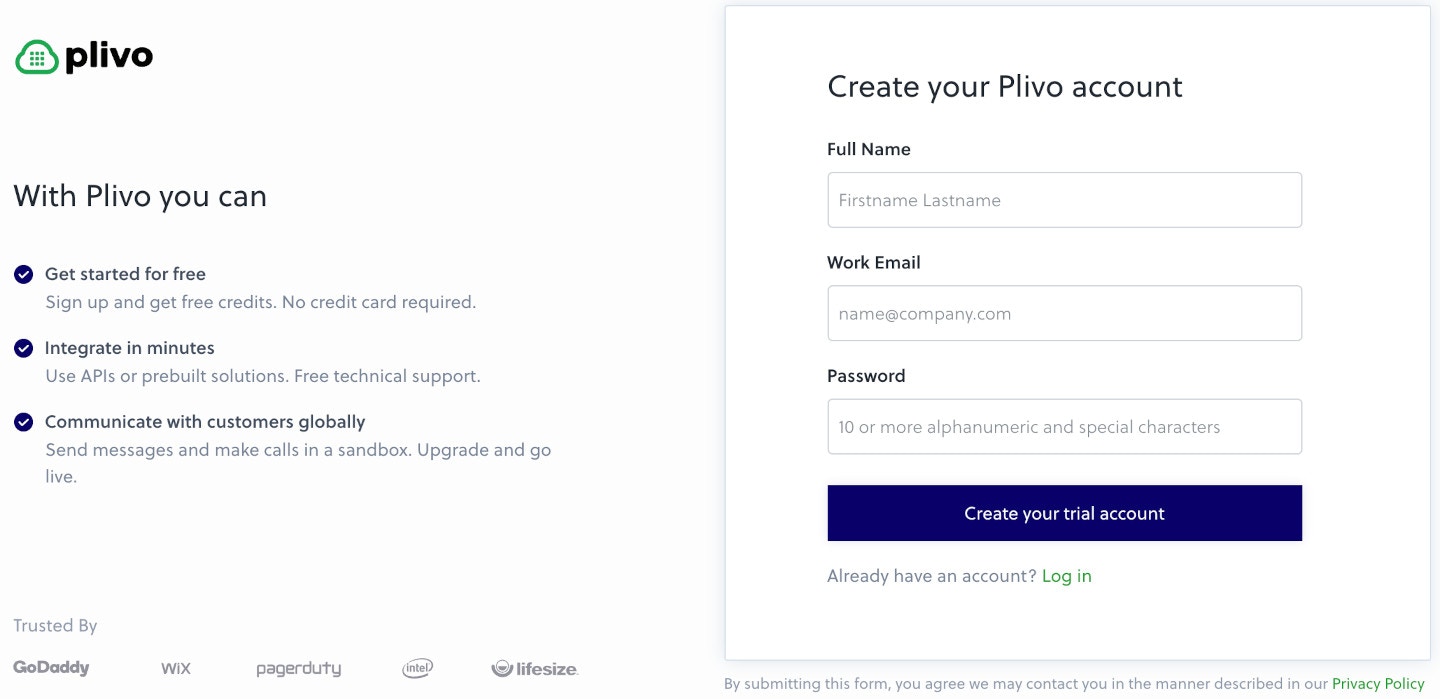
When you sign up with Plivo, we give you a free trial account and free credits to experiment with and learn about our services. You can add a number to your account to start testing the full range of our voice and SMS service features.Follow these steps to get a free trial account:- Sign up with your work email address.
- Check your inbox for an activation email message from Plivo. Click on the link in the message to activate your account.
- Enter your mobile number to complete the phone verification step.
Sign up with your work email address
- Using PHLO
- Using XML
Install Node.js, Serverless, Express, and the Plivo Node.js SDK
You must set up and install Node.js, Serverless, Express, and Plivo Node.js SDK before you make your first outbound call.You also need an AWS account. If you don’t have an account, you can create one for free.Install Node.js
You can check whether you have Node.js installed under macOS or Linux by running the commandnode --version in a terminal window. Under Windows, open a Windows command prompt or PowerShell and type node -v. If you don’t have Node.js installed or want a more current version, download and install it.Install Serverless, Express, and the Plivo Node.js SDK
Create a project directory and change into it, then use npm to create a new Node.js project.Copy
Ask AI
$ mkdir my-express-application && cd my-express-application
$ npm init -f
Copy
Ask AI
$ npm install --save serverless-http express plivo
AWS_ACCESS_KEY_ID and AWS_SECRET_ACCESS_KEY environment variables. The Serverless framework accesses the values of these variables to publish the project to AWS. If you’ve never obtained these credentials from AWS before, the Serverless framework documentation includes step-by-step instructions on how to do so.Once you’ve set up your development environment, you can start sending and receiving messages using our APIs and XML documents. Here are three common use cases to get you started.Make your first outbound call
You can create and deploy a PHLO to make an outbound call with a few clicks on the PHLO canvas, and trigger it with some simple code.Create the PHLO
To create a PHLO, visit the PHLO page of the Plivo console. If this is your first PHLO, the PHLO page will be empty.- Click Create New PHLO.
-
In the Choose your use case pop-up, click Build my own. The PHLO canvas will appear with the Start node.
Note: The Start node is the starting point of any PHLO. It lets you trigger a PHLO to start upon one of three actions: incoming SMS message, incoming call, or API request.
- From the list of components on the left side, drag and drop the Initiate Call component onto the canvas. When a component is placed on the canvas it becomes a node.
- Draw a line to connect the Start node’s API Request trigger state to the Initiate Call node.
-
In the Configuration pane at the right of the canvas, configure the Initiate Call node with a caller ID in the From field. Enter the destination number you wish to call in the To field.
Note: You can define a static payload by specifying values when you create the PHLO, or define a dynamic payload by passing values through Liquid templating parameters when you trigger the PHLO from your application.
- Once you’ve configured the node, click Validate to save the configuration.
- Similarly, create a node from the Play Audio component. Connect the Initiate Call node to the Play Audio node using the Answered trigger state.
- Configure the Play Audio node to play a message to the user by entering text in the Speak Text box in the Prompt section of the Configuration pane — for example, “Hello, you just received your first call.”
- Connect the Initiate Call node’s Answered trigger state to the Play Audio node.
- After you complete the configuration, give the PHLO a name by clicking in the upper left, then click Save.
Trigger the PHLO
You integrate a PHLO into your application workflow by making an API request to trigger the PHLO with the required payload — the set of parameters you pass to the PHLO. You can define a static payload by specifying values when you create the PHLO, or define a dynamic payload by passing values through parameters when you trigger the PHLO from your application.In either case, you need your Auth ID and Auth Token, which you can get from the overview page of the Plivo console.With a static payload
When you configure values when creating the PHLO, they act as a static payload.Code
Create a file called index.js and paste into it this code.Copy
Ask AI
const serverless = require('serverless-http');
const express = require('express')
const bodyParser = require('body-parser')
const plivo = require('plivo')
const app = express()

app.get('/trigger_phlo/', function(request, response) {
    var PhloClient = plivo.PhloClient;
    var authId = '<auth_id>';
    var authToken = '<auth_token>';
    var phloId = '<phlo_id>';
    var phloClient = phlo = null;

    phloClient = new PhloClient(authId, authToken);
    phloClient.phlo(phloId).run().then(function(result) {
        console.log('Phlo run result', result);
    }).catch(function(err) {
        console.error('Phlo run failed', err);
    })
})

module.exports.handler = serverless(app);
With a dynamic payload
To use dynamic values for the parameters, use Liquid templating parameters when you create the PHLO and pass the values from your code when you trigger it.Code
Create a file called index.js and paste into it this code.Copy
Ask AI
const serverless = require('serverless-http');
const express = require('express')
const bodyParser = require('body-parser')
const plivo = require('plivo')
const app = express()

app.get('/trigger_phlo/', function(req, res) {
    var plivo = require('plivo');
    var PhloClient = plivo.PhloClient;
    var authId = '<auth_id>';
    var authToken = '<auth_token>';
    var phloId = '<phlo_id>';
    var phloClient = phlo = null;
    var payload = {
        From: '<sender_id>',
        To: '<destination_number>'
    }
    phloClient = new PhloClient(authId, authToken);
    phloClient.phlo(phloId).run(payload).then(function (result) {
        console.log('Phlo run result', result);
    }).catch(function (err) {
        console.error('Phlo run failed', err);
    });
})

module.exports.handler = serverless(app);
Test
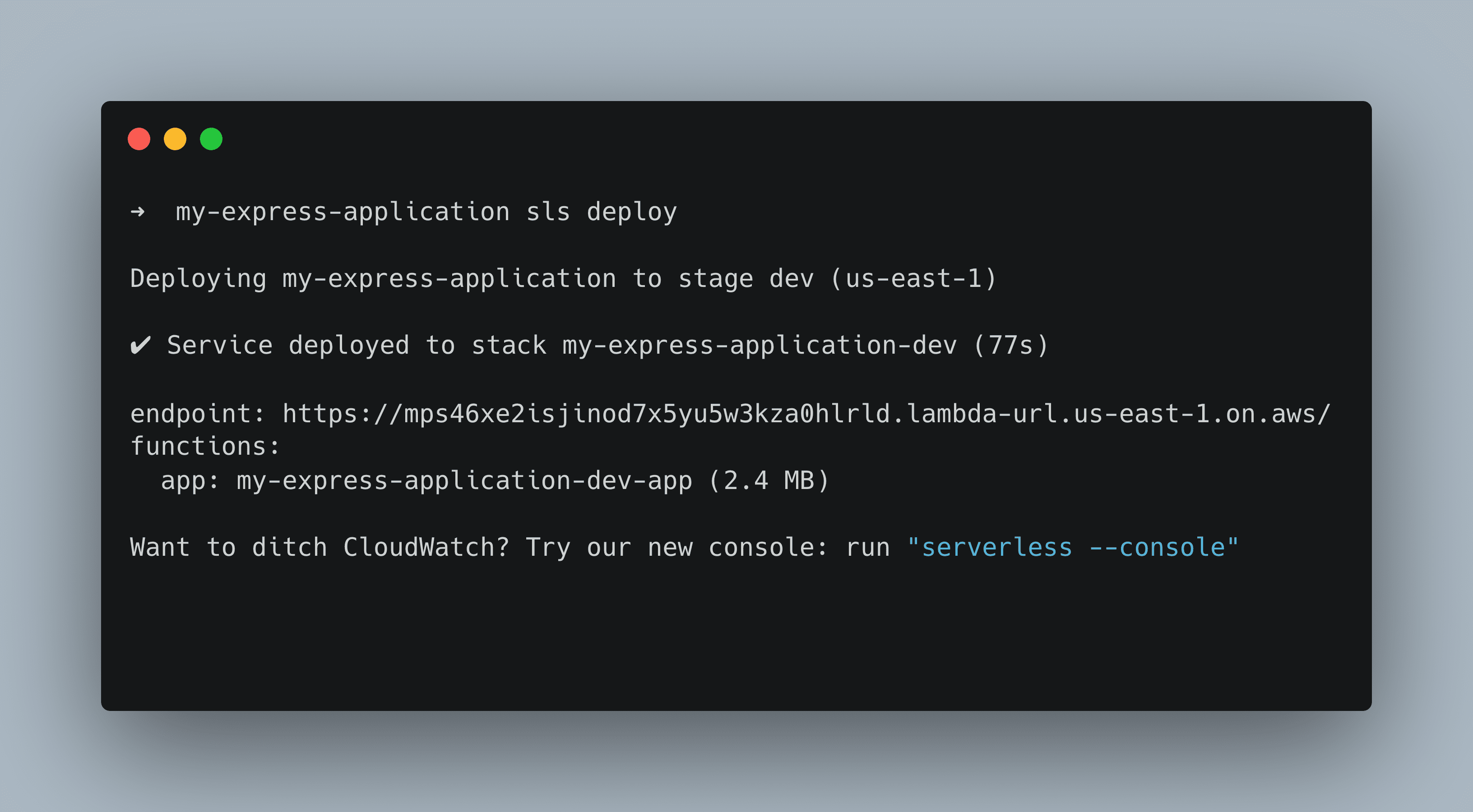
Save the file and run this command to deploy the application.Copy
Ask AI
$ sls deploy
Note: If you’re using a Plivo Trial account, you can make calls only to phone numbers that have been verified with Plivo. You can verify (sandbox) a number by going to the console’s Phone Numbers > Sandbox Numbers page.
Receive your first inbound call
You can create and deploy a PHLO to receive an inbound call with a few clicks on the PHLO canvas, without writing a single line of code.Prerequisite
To receive incoming calls, you must have a voice-enabled Plivo phone number. You can rent numbers from the Numbers page of the Plivo console, or by using the Numbers API.Create the PHLO
To create a PHLO, visit the PHLO page of the Plivo console. If this is your first PHLO, the PHLO page will be empty.- Click Create New PHLO.
-
In the Choose your use case pop-up, click Build my own. The PHLO canvas will appear with the Start node.
Note: The Start node is the starting point of any PHLO. It lets you trigger a PHLO to start upon one of three actions: incoming SMS message, incoming call, or API request.
- From the list of components on the left side, drag and drop the Play Audio component onto the canvas. When a component is placed on the canvas it becomes a node.
- Draw a line to connect the Start node’s Incoming Call trigger state to the Play Audio node.
- In the Configuration pane at the right of the canvas, configure the Play Audio node to play a message to the caller.
- Once you’ve configured the node, click Validate to save the configuration.
- Give the PHLO a name by clicking in the upper left, then click Save.
Assign the PHLO to a Plivo number
Once you’ve created and configured your PHLO, assign it to a Plivo number.- On the Numbers page of the console, under Your Numbers, click the phone number you want to use for the PHLO.
- In the Number Configuration box, select PHLO from the Application Type drop-down.
- From the PHLO Name drop-down, select the PHLO you want to use with the number, then click Update Number.
Test
You can now make a call to your Plivo phone number and see how the inbound call is handled.For more information about creating a PHLO application, see the PHLO Getting Started guide. For information on components and their variables, see the PHLO Components Library.Forward an inbound call
You can create and deploy a workflow to implement call forwarding with a few clicks on the PHLO canvas.Prerequisite
To receive incoming calls, you must have a voice-enabled Plivo phone number. You can rent numbers from the Numbers page of the Plivo console, or by using the Numbers API.Create the PHLO
To create a PHLO, visit the PHLO page of the Plivo console. If this is your first PHLO, the PHLO page will be empty.- Click Create New PHLO.
-
In the Choose your use case pop-up, click Build my own. The PHLO canvas will appear with the Start node.
Note: The Start node is the starting point of any PHLO. It lets you trigger a PHLO to start upon one of three actions: incoming SMS message, incoming call, or API request.
- From the list of components on the left side, drag and drop the Call Forward component onto the canvas. When a component is placed on the canvas it becomes a node.
-
Draw a line to connect the Start node‘s Incoming Call trigger state to the Call Forward node.
-
In the Configuration tab at the right of the canvas, configure the Call Forward node to select the From number using a variable. Enter two curly brackets to view all available variables, and choose the appropriate one. Enter all the numbers you want to call in the To field, separated with commas.
- Once you’ve configured the node, click Validate to save the configuration.
- Give the PHLO a name by clicking in the upper left, then click Save.
Assign the PHLO to a Plivo number
Once you’ve created and configured your PHLO, assign your PHLO to a Plivo number.- On the Numbers page of the console, under Your Numbers, click the phone number you want to use for the PHLO.
- In the Number Configuration box, select PHLO from the Application Type drop-down.
- From the PHLO Name drop-down, select the PHLO you want to use with the phone number, then click Update Number.
Test
You can now call your Plivo phone number and see how the inbound call is forwarded.For more information about creating a PHLO application, see the PHLO Getting Started guide. For information on components and their variables, see the PHLO Components Library.More use cases
We illustrate more than 20 use cases with code for both PHLO and API/XML on our documentation pages..Install Node.js, Serverless, Express, and the Plivo Node.js SDK
You must set up and install Node.js, Serverless, Express, and Plivo Node SDK before you make your first outbound call.You also need an AWS account. If you don’t have an account, you can create one for free.Install Node.js
You can check whether you have Node.js installed under macOS or Linux by running the command node –version in a terminal window. Under Windows, open a Windows command prompt or PowerShell and type node -v. If you don’t have Node.js installed or want a more current version, download and install it.Install Serverless, Express, and the Plivo Node.js SDKCreate a project directory and change into it, then use npm to create a new Node.js project.Copy
Ask AI
$ mkdir my-express-application && cd my-express-application
$ npm init -f
Copy
Ask AI
$ npm install --save serverless-http express plivo
AWS_ACCESS_KEY_ID and AWS_SECRET_ACCESS_KEY environment variables. The Serverless framework accesses the values of these variables to publish the project to AWS. If you’ve never obtained these credentials from AWS before, the Serverless framework documentation includes step-by-step instructions on how to do so.Once you’ve set up your development environment, you can start sending and receiving messages using our APIs and XML documents. Here are three common use cases to get you started.Make your first outbound call
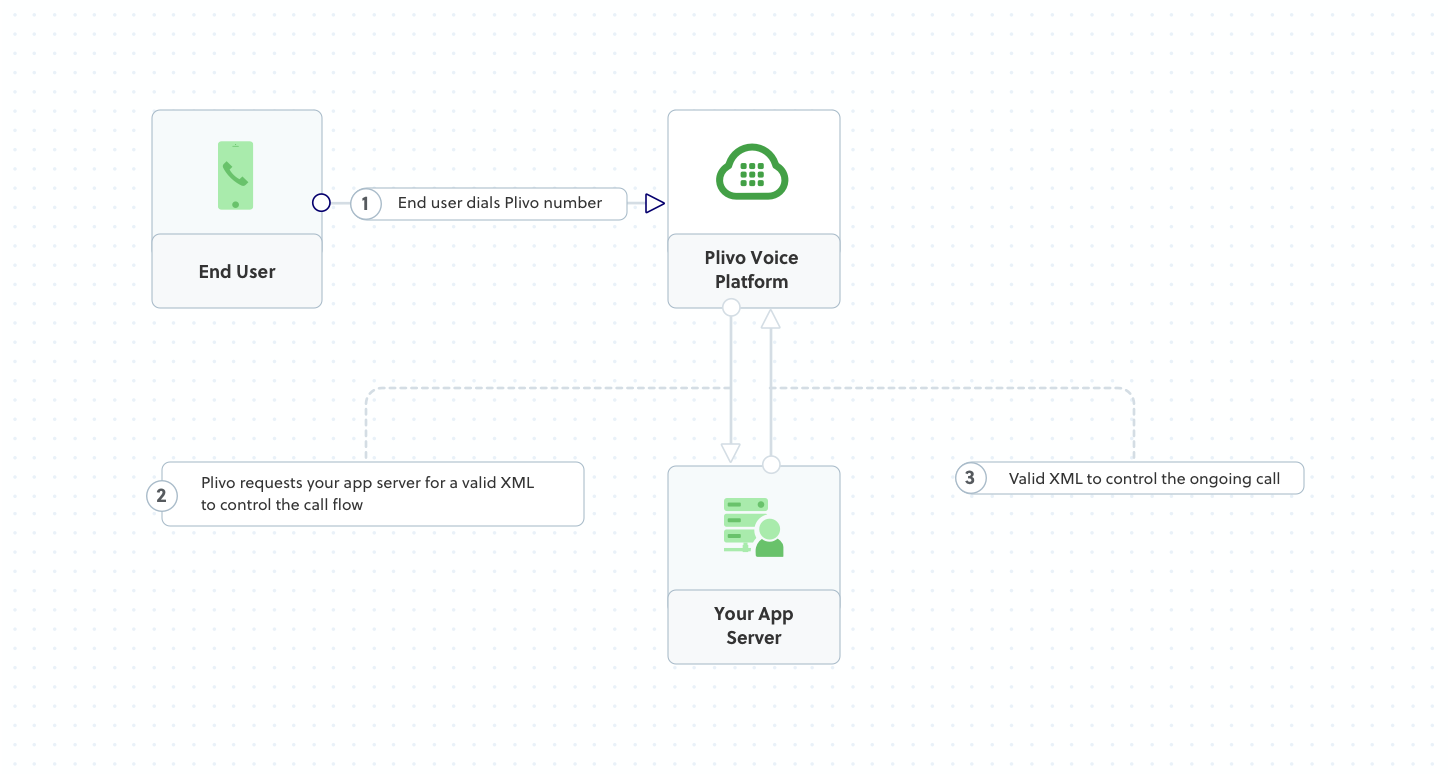
Copy
Ask AI
<Response>
  <Speak>Congratulations! You've made your first outbound call</Speak>
</Response>
Create a Serverless server
Create a file calledindex.js and paste into it this code.Copy
Ask AI
const serverless = require('serverless-http');
const express = require('express')
const plivo = require('plivo')
const app = express()

app.get('/outbound_call/', function(request, response) {
   let client = new plivo.Client('<auth_id>', '<auth_token>');
   client.calls.create(
        "<caller_id>",
        "<destination_number>",
        "https://s3.amazonaws.com/static.plivo.com/answer.xml",
        {
            answerMethod: "GET",
        },

   ).then(function(response) {
       console.log(response)
   });
});

module.exports.handler = serverless(app);
Note: We recommend that you store your Plivo credentials in the
auth_id and auth_token environment variables to avoid the possibility of accidentally committing them to source control. If you do this, you can initialize the client with no arguments and Plivo will automatically fetch the values from the environment variables. You can use process.env to store environment variables and fetch them when initializing the client.Create a Serverless configuration file
In the project directory, create a configuration file called serverless.yml, which Serverless uses to handle deployments, and paste into it this code.Copy
Ask AI
# serverless.yml
service: my-express-application

provider:
 name: aws
 runtime: nodejs16.x
 stage: dev
 region: us-east-1

functions:
 app:
   handler: index.handler
   url: true
Copy
Ask AI
$ sls deploy
Test
AWS will report an endpoint on which you can find your application — for example, here it shows https://mps46xe2isjinod7x5yu5w3kza0hlrld.lambda-url.us-east-1.on.aws.You should see your basic server application in action at the below URL:https://mps46xe2isjinod7x5yu5w3kza0hlrld.lambda-url.us-east-1.on.aws./outbound_call/
Note: If you’re using a Plivo Trial account, you can send messages only to phone numbers that have been verified with Plivo. You can verify (sandbox) a number by going to the console’s Phone Numbers > Sandbox Numbers page.
Receive your first inbound call
Modify the Serverless server
Add the code to receive a call to the index.js file we already built.Copy
Ask AI
const serverless = require('serverless-http');
const express = require('express')
const bodyParser = require('body-parser')
const plivo = require('plivo')
const app = express()

app.use(bodyParser.urlencoded({
   extended: true
}));
app.use(function(req, response, next) {
   response.contentType('application/xml');
   next();
});

// make an outbound Call
app.get('/outbound_call/', function(request, response) {
......// Make a call code
});

// receive call
app.get('/receive_call/', function(request, response) {
   var resp = plivo.Response();
    var speak_body = "Hello, you just received your first call";
    resp.addSpeak(speak_body);
    response.writeHead(200, {'Content-Type': 'text/xml'});
    response.end(resp.toXML());
});
Copy
Ask AI
$ sls deploy
Create a Plivo application to receive calls
Associate the controller you created with Plivo by creating a Plivo application. Visit Voice > Applications and click Add New Application. You can also use Plivo’s Application API.Give your application a name — we called ours Receive_call. Enter the server URL you want to use (for example https://<yourdomain>.com/receive_call/) in the Primary Answer URL field and set the method to POST. Click Create Application to save your application.Assign a Plivo number to your application
Navigate to the Numbers page and select the phone number you want to use for this application.From the Application Type drop-down, select XML Application.From the Plivo Application drop-down, select Receive Call (the name we gave the application).Click Update Number to save.Test
Make a call to your Plivo number using any phone.Forward an incoming call
Modify the Serverless server
Copy
Ask AI
const serverless = require('serverless-http');
const express = require('express')
const bodyParser = require('body-parser')
const plivo = require('plivo')
const app = express()

app.use(bodyParser.urlencoded({
   extended: true
}));
app.use(function(req, response, next) {
   response.contentType('application/xml');
   next();
});

// make an outbound call
app.get('/outbound_call/', function(request, response) {
   ...//Make a call
});

// receive call
app.get('/receive_call/', function(request, response) {
   ...// Receive a call code
});

// Forward incoming call
app.get('/forward_call/', function(request, response) {
var resp = plivo.Response();
var dial = resp.addDial();

dial.addNumber("<destination_number>");
response.writeHead(200, {
   'Content-Type': 'text/xml'
});
response.end(resp.toXML());
});
Copy
Ask AI
$ sls deploy
Create a Plivo application to forward calls
Associate the Express application you created with Plivo by creating a Plivo application. Visit Voice > Applications in the Plivo console and click on Add New Application, or use Plivo’s Application API.Give your application a name — we called ours Forward Call. Enter the server URL you want to use (for example https://<yourdomain>.com/forward_call/) in the Answer URL field and set the method to POST. Click Create Application to save your application.Assign a Plivo number to your application
Navigate to the Numbers page and select the phone number you want to use for this application.From the Application Type drop-down, select XML Application.From the Plivo Application drop-down, select Forward Call (the name we gave the application).Click Update Number to save.